
Sugar & Sweeteners in Baking: How They Affect Texture + Smart Substitutions
Sugar does so much more than sweeten your baked goods. It controls moisture, spread, browning, tenderness, and even structure. Understanding how different sugars behave — and which sugar substitutions actually work — helps you bake confidently without ruining your recipe.
What Sugar Really Does in Baking
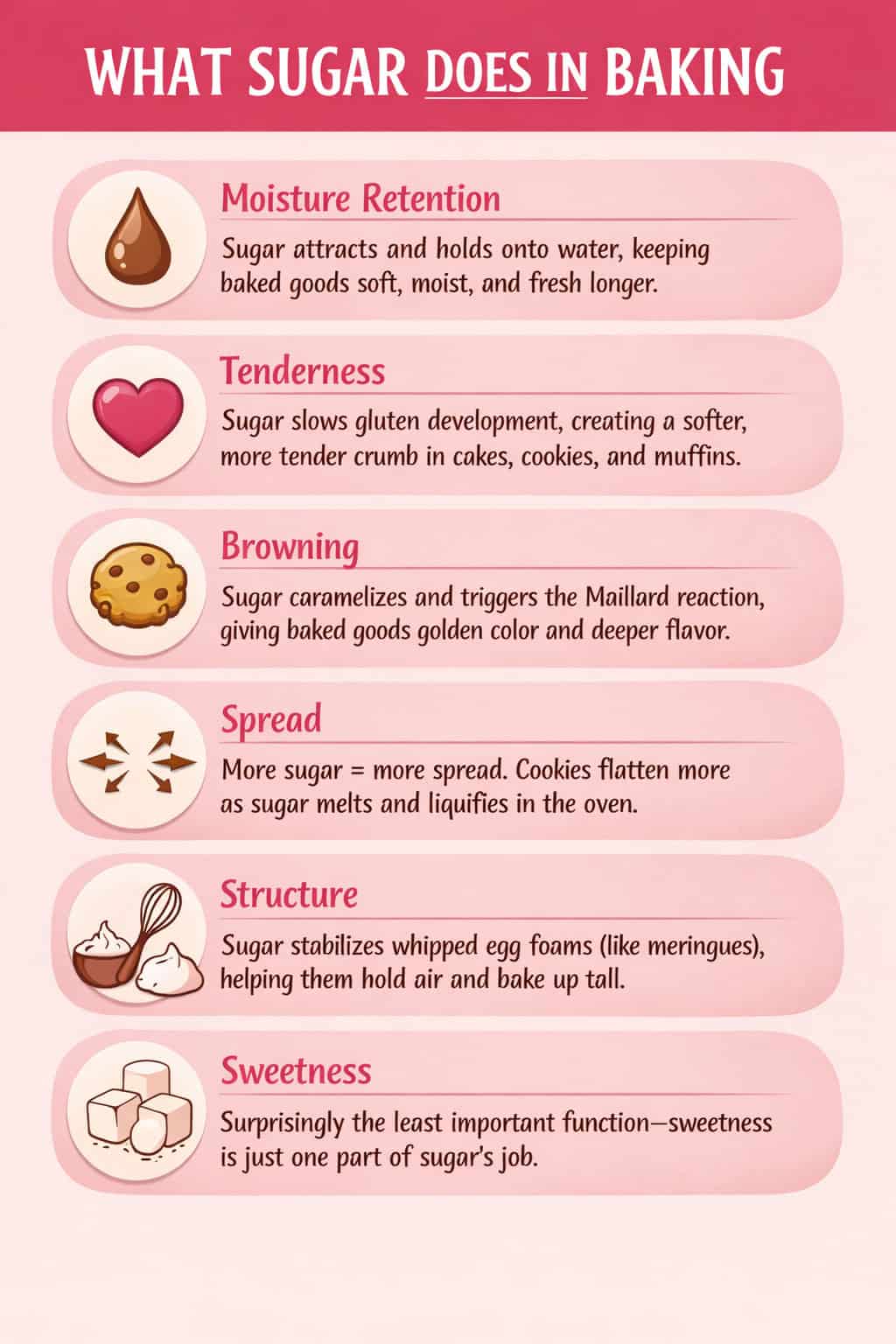
Sugar is a functional ingredient, not just a flavor booster. Here’s what it controls:
- Moisture retention — sugar attracts and holds onto water, keeping baked goods soft.
- Tenderness — it interferes with gluten formation, giving you a softer crumb.
- Spread — more sugar = more spread (especially in cookies).
- Browning — caramelization + Maillard reaction = golden edges and deeper flavor.
- Texture — crisp, chewy, cakey… sugar plays a huge role.
- Structure — especially in whipped egg recipes (meringues, angel food cake).
Sweetness is actually the least important function.
Types of Sugar & How They Behave
Granulated Sugar
- Classic white sugar. Neutral flavor, medium moisture, strong spread, great for creaming.
- Best for: cookies, cakes, muffins, quick breads
- Notes: dissolves easily; creates crisp edges and light crumb.
I keep every Domino Sugar on hand in my kitchen because each one brings something special to baking. Their classic granulated sugar is my everyday go‑to for consistent results, their brown sugars add that perfect chewy warmth, and their powdered sugar blends beautifully into frostings and glazes. I also love their Baking Sugar because it dissolves quickly and adds a soft, caramel‑kissed flavor to cookies, bars, and cakes. If you’ve ever wondered which sugars bakers actually reach for, these are the ones I trust and use in my own recipes.
Brown Sugar (Light & Dark)
- Granulated sugar + molasses. Adds moisture, chewiness, and deeper flavor.
- Light brown: mild caramel Dark brown: richer molasses, more moisture
- Best for: chewy cookies, blondies, banana bread
- Notes: increases moisture + chew; reduces spread slightly.
Powdered Sugar
- Finely ground sugar with cornstarch.
- Best for: frostings, shortbread, meltaway cookies
- Notes: creates a tender, sandy, melt‑in‑your‑mouth texture.
Turbinado / Raw Sugar
- Large crystals, lightly processed.
- Best for: crunchy toppings
- Notes: doesn’t dissolve well in batters.
Coconut Sugar
- Caramel‑like flavor, lower sweetness, darker color.
- Best for: brownies, banana bread, muffins
- Notes: makes baked goods darker and slightly drier.
Liquid Sweeteners (Honey, Maple, Agave)
- High moisture, strong flavor (except agave), acidic (honey), and sweeter than sugar.
- Best for: muffins, granola, bars
- Notes: affects moisture, browning, and structure — must adjust liquids.
Recommended Sugar Brands I Use
I keep every Domino Sugar on hand in my kitchen because each one brings something special to baking. Their classic granulated sugar is my everyday go‑to for consistent results, their brown sugars add that perfect chewy warmth, and their powdered sugar blends beautifully into frostings and glazes. I also love their Baking Sugar because it dissolves quickly and adds a soft, caramel‑kissed flavor to cookies, bars, and cakes. If you’ve ever wondered which sugars bakers actually reach for, these are the ones I trust and use in my own recipes.
How Sugar in Baking Affects Texture
- More sugar = more spread (cookies flatten more)
- More sugar = more browning
- Brown sugar = more moisture + chew
- Powdered sugar = tender, sandy, meltaway texture
- Liquid sweeteners = denser, moister, darker baked goods
Smart Sugar Substitutions (What Works & What Doesn’t)
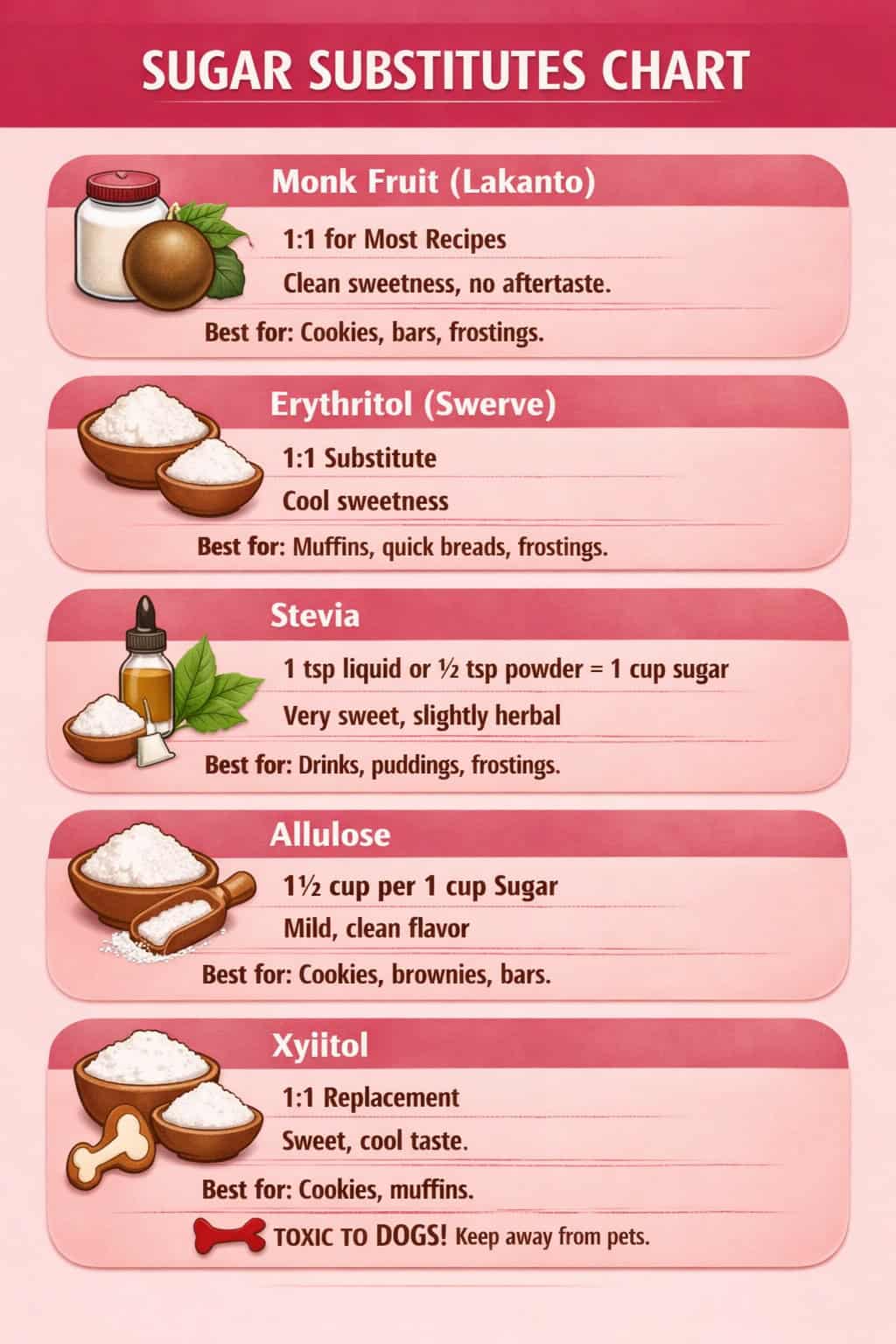
Granulated ↔ Brown Sugar
- Swap 1:1
- Expect: more moisture + chew with brown; more crispness with white
- Works in: cookies, bars, muffins
- Doesn’t work in: meringues, angel food cake
Granulated → Coconut Sugar
- Swap 1:1
- Expect: darker color, slightly drier crumb
- Works in: brownies, banana bread, muffins
- Not ideal for: light‑colored cakes or sugar cookies
Granulated → Honey / Maple / Agave
Use this formula:
- Use ¾ cup liquid sweetener for every 1 cup sugar
- Reduce other liquids by 2–4 tablespoons
- Lower oven temp by 25°F (browns faster)
- Works in: muffins, quick breads, bars
- Not ideal for: crisp cookies, meringues, cakes needing structure
Brown Sugar → Granulated
- Swap 1:1
- Expect: less moisture, less chew, more crisp
- Works in: cookies, bars
- Not ideal for: recipes relying on moisture (banana bread, blondies)
Powdered Sugar → Granulated
- Not interchangeable in most recipes
- Only works when sugar is being dissolved (e.g., syrups)
Low Sugar in Baking Substitutes
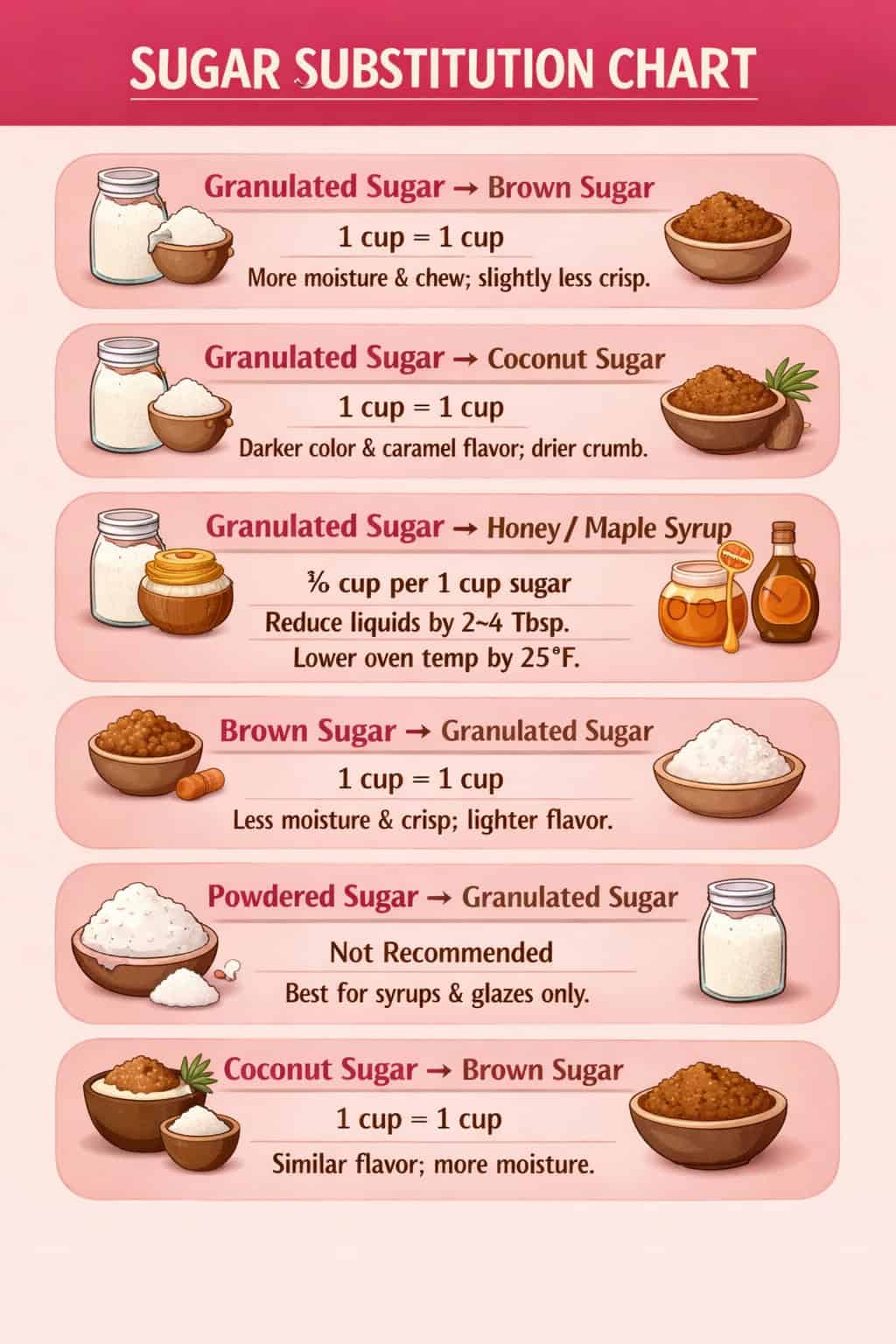
Modern sweeteners for low‑sugar baking:
- Monk Fruit (Lakanto): 1:1 — clean sweetness, no aftertaste.
- Erythritol (Swerve): 1:1 — cool sweetness; add moisture.
- Stevia: 1 tsp liquid = 1 cup sugar — combine with bulking agent.
- Allulose: 1⅓ cup per 1 cup sugar — browns like sugar.
- Xylitol: 1:1 — sweet, cool; toxic to dogs.
When You Should Not Substitute Sugar
Some recipes rely on sugar’s structure, not just sweetness:
- Meringues
- Angel food cake
- Whipped cream stabilizers
- Candy making
- Caramel
- Certain crisp cookies
- Anything requiring precise crystallization
If structure depends on sugar, substitutions will fail.
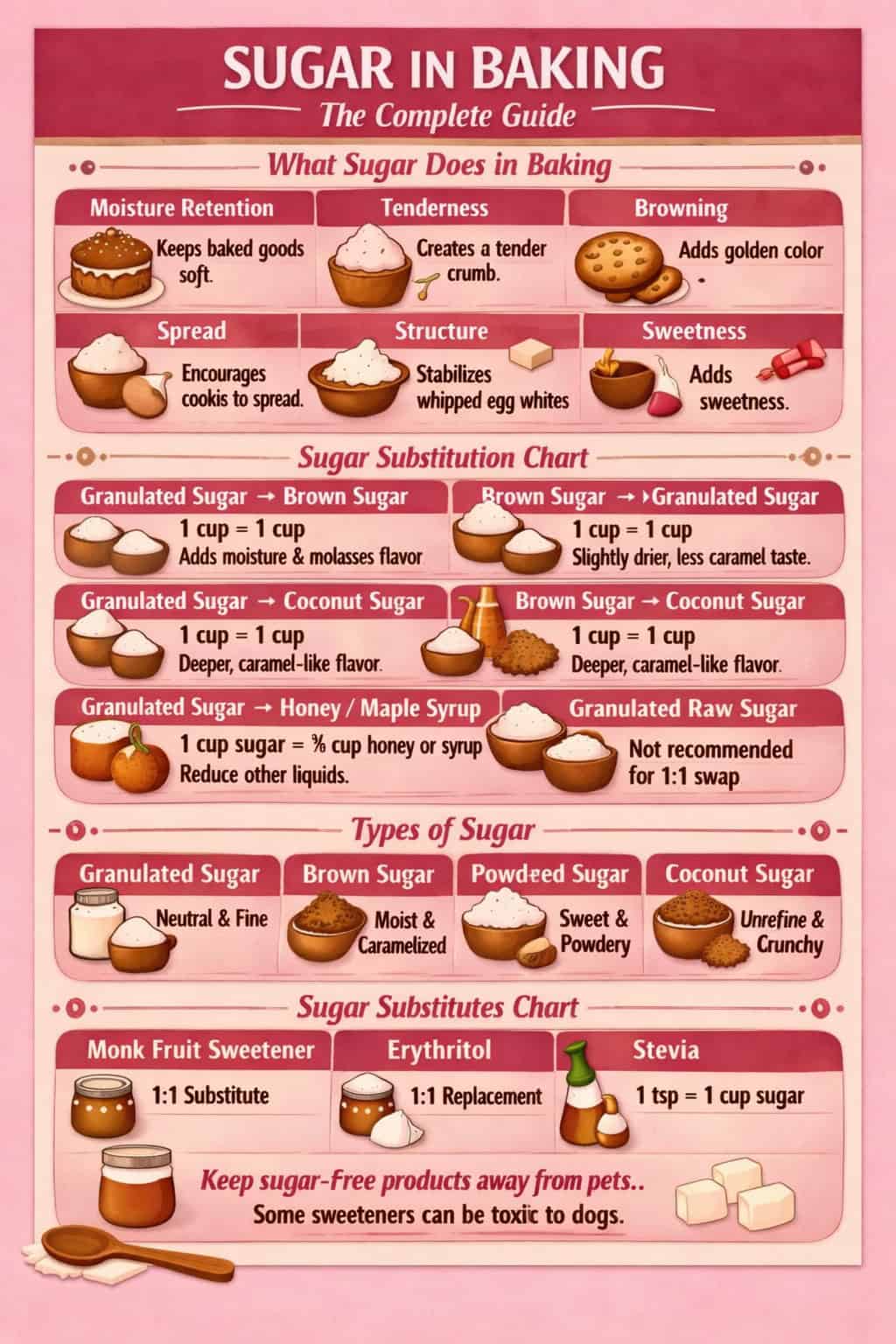
Quick Sugar Substitution Chart
When you’re mid‑bake and realize you’re out of brown sugar or need a lighter option, this quick sugar substitution chart makes it easy to swap sweeteners without sacrificing texture or flavor. Whether you’re adjusting for moisture, color, or crispness, these ratios help you understand what sugar does in baking and how each type behaves. From classic granulated swaps to modern sugar substitutes for baking, you’ll find the perfect balance for cookies, bars, and cakes — all in one cozy‑luxe guide.
Key Takeaways
- Sugar controls moisture, spread, browning, and texture — not just sweetness.
- Brown sugar = moisture + chew; granulated = crisp + light.
- Liquid sweeteners require recipe adjustments.
- Some recipes simply cannot handle sugar substitutions.
- Use the sugar substitutions chart to choose swaps that won’t ruin your recipe.
Sugar is more than sweetness — it’s structure, tenderness, and golden color in every bite. With this complete sugar in baking guide, you can confidently choose between traditional sugars, modern alternatives, and every type of sugar for baking. Bookmark this sugar substitution chart for quick reference, and explore the full sugar substitutes for baking section to keep your treats delicious, balanced, and beautifully Baking ChocolaTess‑approved.
Want more quick ideas and dessert inspo? Follow on Pinterest, Instagram or Facebook for recipe updates, baking tips, and lots of sweet inspiration.
More Tips and Recipes
- Why Chocolate Turns White (Chocolate Bloom Explained)
- Vanilla White Bundt Cakes
- Cocoa Powder 101 — Types, Differences & How to Bloom Cocoa for Better Flavor
- How to Avoid Overmixing (Baking 101 Guide)
- Baking 101 Tips for Beginners
- How to Properly Measure Flour (The Right Way Every Time)
- Butter & Fats: How They Affect Texture + Smart Swaps
- Strawberry Frosted Cookie Bars