Butter & Fats: How They Affect Texture + Smart Swaps
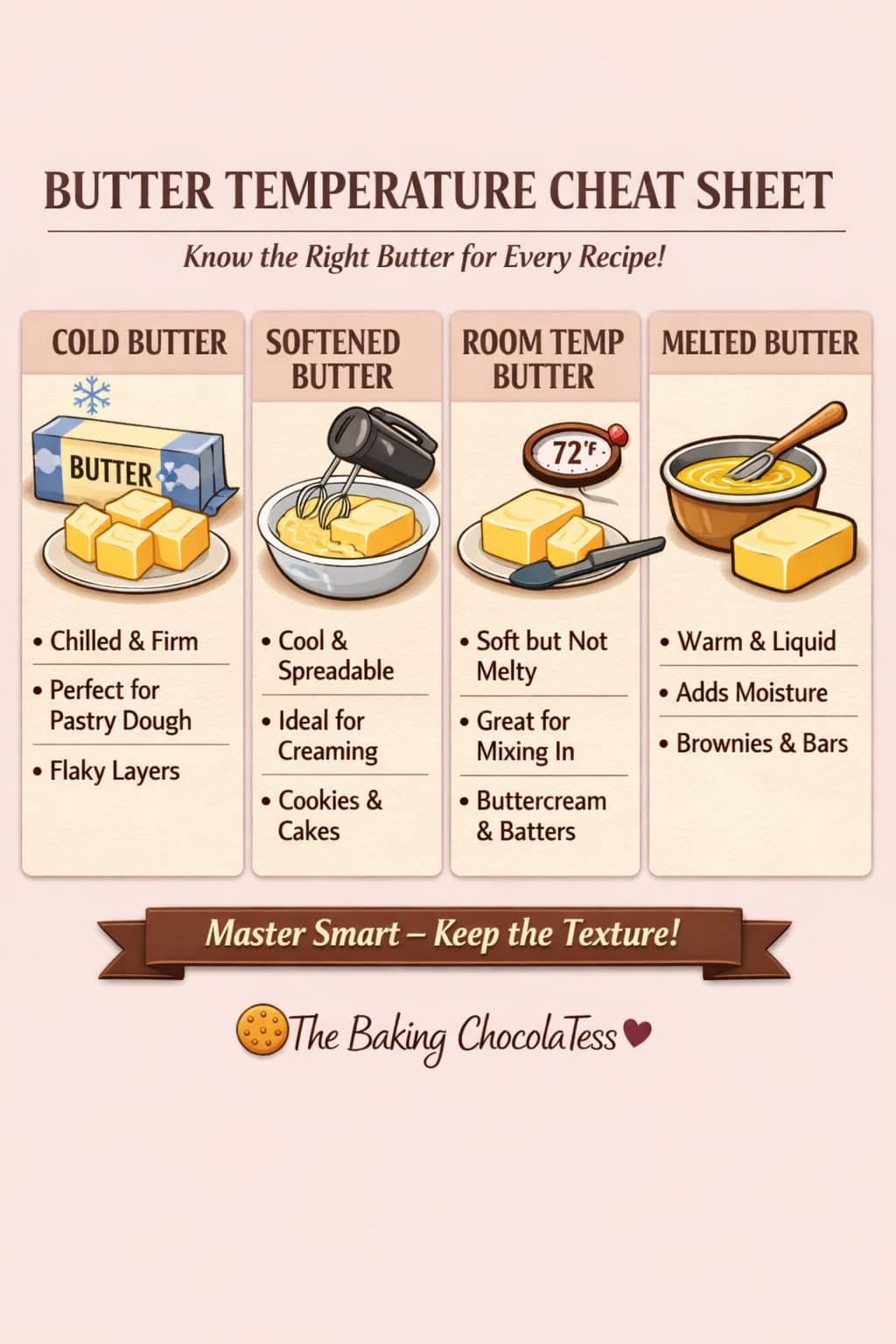
Butter isn’t just a flavor booster — it’s a temperature‑sensitive powerhouse that decides whether your cookies puff, your pastries flake, or your bars turn glossy and chewy. Understanding how butter behaves at every stage (cold, softened, room temp, and melted) is one of the simplest ways to level up your baking game.
🧈 This guide is part of The Baking ChocolaTess Baking 101: Ingredients Series — where we break down the science behind your favorite ingredients so you can bake smarter, cozier, and more confidently.
What Butter Does in Baking
Butter adds richness and flavor, but it also affects structure. One of the biggest surprises for new bakers is how much butter in baking influences rise, moisture, and overall texture. The water in butter turns to steam in the oven, helping cakes and cookies rise. The fat coats flour proteins, limiting gluten development and creating tenderness. Butter also melts during baking, which affects how much cookies spread.
When butter is creamed with sugar, it traps tiny air pockets that expand in the oven. This is why creamed‑butter recipes turn out light and fluffy. In brownies and bars, melted butter creates a denser, chewier texture because there’s no air incorporated.
Substitute it — gives you total control over texture.
Butter Temperatures: Cold vs Softened vs Melted
Many baking issues come down to choosing the right temperature, and understanding cold vs softened butter is the key to getting consistent results.
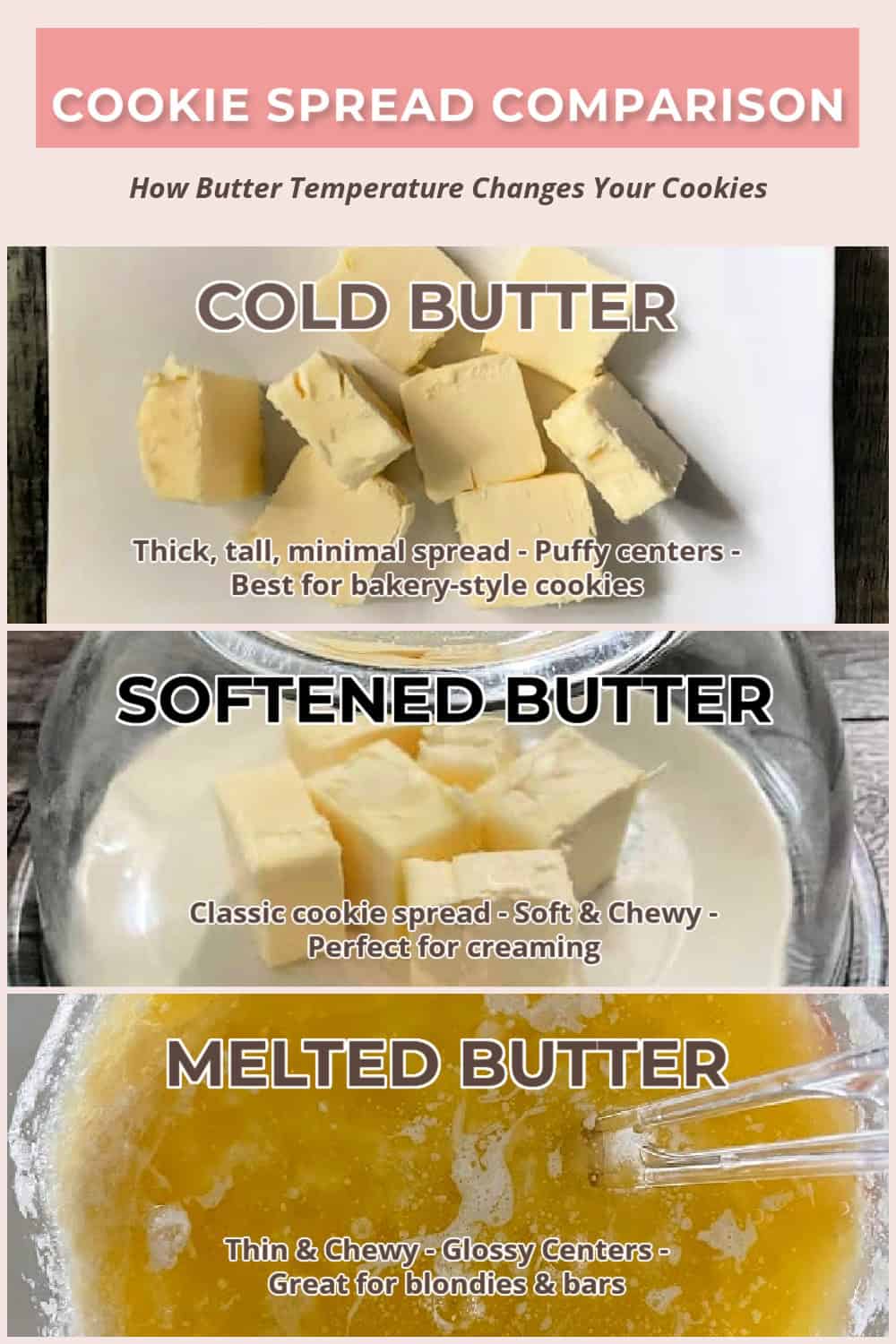
- Cold butter creates flaky layers. When cold pieces of butter hit the oven, they release steam and push apart the dough, giving you biscuits, scones, and pie crust with visible layers. Cold butter also helps cookies stay thick and tall.
- Softened butter is ideal for creaming. When butter is soft enough to press with a finger but still holds its shape, it can whip with sugar and create air pockets. This leads to tender cakes, soft cookies, and bakery‑style crumb.
- Melted butter produces dense, chewy textures. Because melted butter can’t trap air, it leads to fudgy brownies, gooey blondies, and chewy cookie bars. It also increases spread, so cookies made with melted butter will be thinner unless the dough is chilled.
European vs American Butter
- European‑style butter has a higher butterfat percentage (82–85%) compared to American butter (80%). That small difference creates big changes in flavor and texture. European butter tastes richer and produces flakier pastries and more tender baked goods. It also browns more beautifully because of the higher fat content.
- American butter is more neutral and consistent, making it great for everyday baking. If a recipe doesn’t specify, assume it was tested with American butter.
Once you understand the differences between European vs American butter, you can choose the one that gives you the flavor and texture you want.
When NOT to Substitute Butter
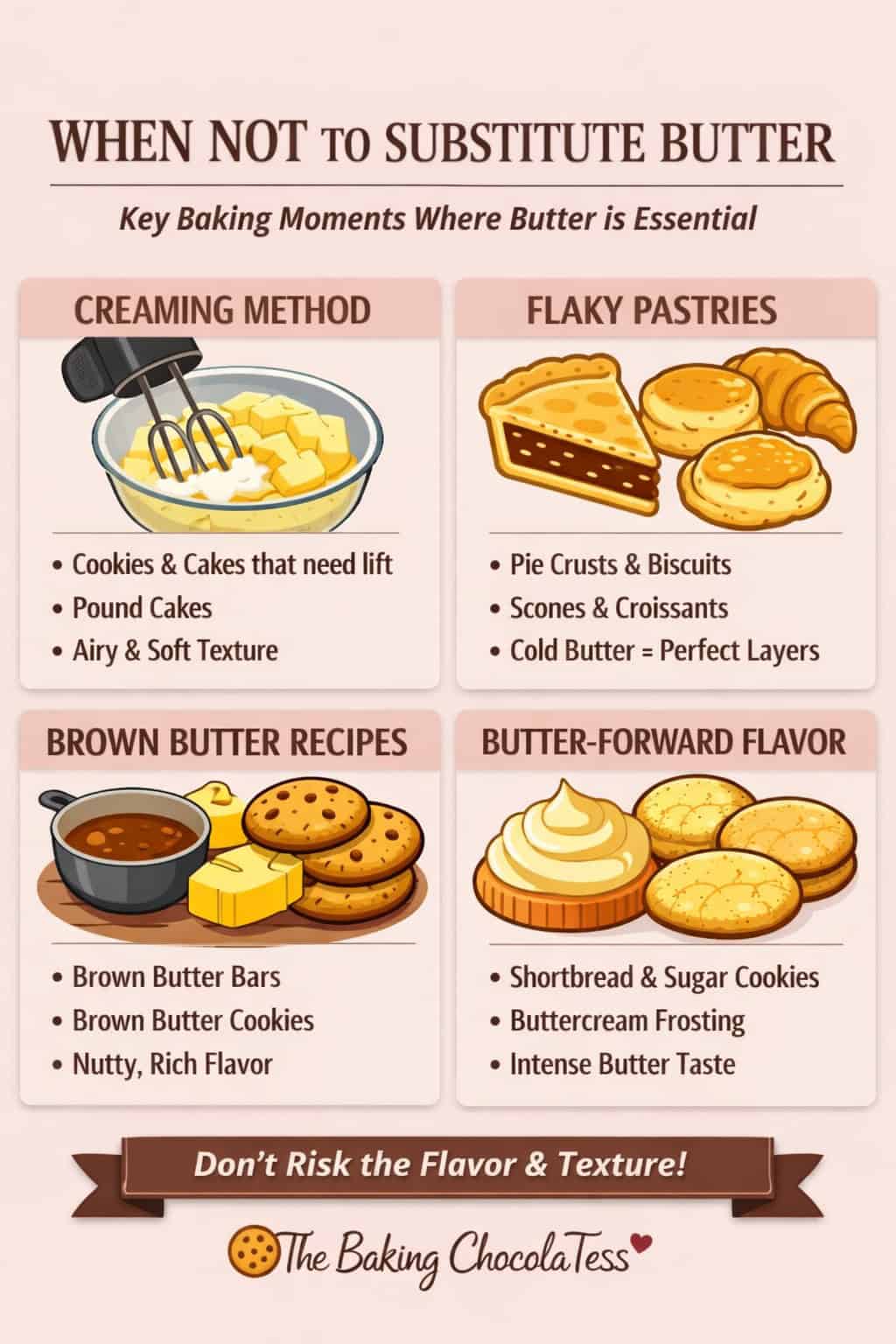
Some recipes rely on butter’s unique structure and water content. In these cases, swapping butter for another fat can cause spreading, collapsing, or a greasy texture.
- Avoid substituting butter in:
- Croissants and laminated doughs
- Shortbread cookies
- Butter cakes that rely on creaming
- Recipes where butter flavor is the star
If the recipe depends on butter’s ability to trap air or create layers, stick with the real thing.
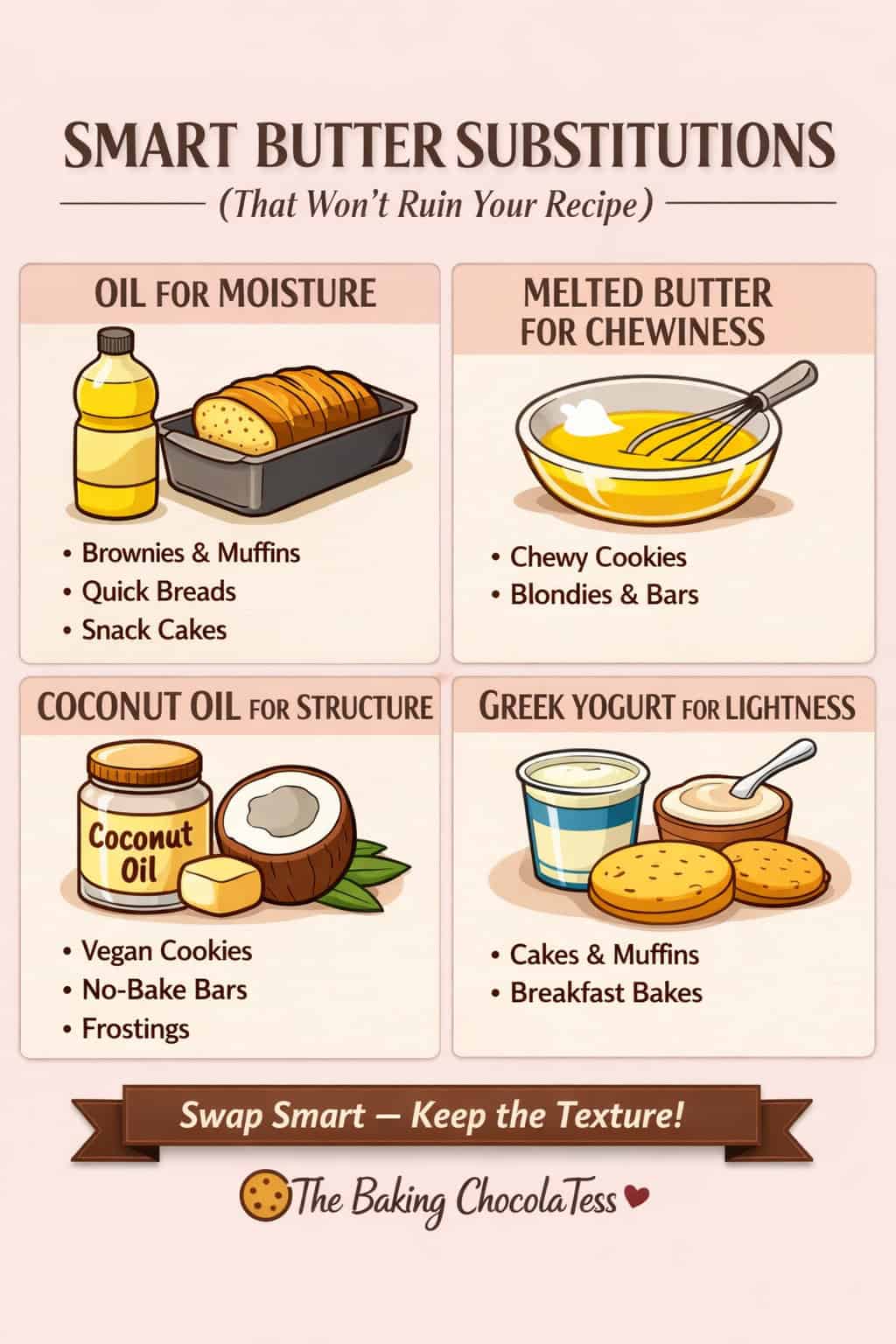
Smart Butter Substitutions (That Won’t Ruin Your Recipe)
- Oil works well in cakes, muffins, and quick breads. It creates a moist, tender crumb but won’t provide lift or structure. Use it when you want softness, not fluffiness.
- Coconut oil behaves similarly to butter when solid and adds a subtle coconut flavor. It works beautifully in brownies, bars, and some cookies. Melted coconut oil will increase spread, so chilling the dough helps.
- Shortening creates structure without flavor. It’s excellent for cookies that need to hold their shape and for frostings that need stability. However, it won’t give you the buttery taste.
- Vegan butter is the closest 1:1 swap. Stick‑style vegan butters perform much better than tub versions because they contain less water. They work well in cookies, bars, and cakes.
- Greek yogurt adds moisture, tenderness, and protein. It’s best used as a partial butter replacement in cakes, muffins, and quick breads. It won’t work in recipes that rely on creaming or flakiness.
Butter isn’t just an ingredient — it’s a temperature‑sensitive tool that shapes everything from texture to flavor. Once you know how to use it cold, softened, room‑temp, or melted, you’ll start baking with intention instead of guesswork.
🧈 Master your butter, master your bake — one cozy recipe at a time.
More Tips & Tricks
- How to Make Perfect Brown Butter
- Quickest Ways to Soften Butter
- How to Avoid Overmixing (Baking 101 Guide)
- How to Melt Chocolate Properly (Double Boiler & Microwave Methods)
This guide is part of The Baking ChocolaTess Baking 101: Ingredients Series, where we break down the science behind everyday ingredients so you can bake smarter, not harder. From butter and sugar to flour and eggs, each mini‑lesson helps you understand why your bakes behave the way they do — and how to make them even better.