
Why Chocolate Turns White (Chocolate Bloom Explained)
Chocolate looking dusty, streaky, or suddenly turning white? That’s chocolate bloom — either fat bloom or sugar bloom — and it happens when chocolate reacts to heat, moisture, or storage issues. The good news: bloomed chocolate is still safe to eat, and once you know why chocolate turns white, you can easily prevent chocolate bloom from happening again.
Chocolate experts note that bloom forms when cocoa butter crystals shift out of alignment, a process explained in this professional chocolate‑science guide.
Alright, let’s break down exactly what chocolate bloom is and why it happens.
What Is Chocolate Bloom?
Chocolate that suddenly looks dusty, streaky, or pale isn’t spoiled — it’s experiencing chocolate bloom. Bloom happens when chocolate reacts to heat, moisture, or storage changes, causing the surface to turn white or cloudy.
There are two types: fat bloom and sugar bloom. Both are safe to eat, but each has different causes and different ways to prevent them.
Why Chocolate Turns White
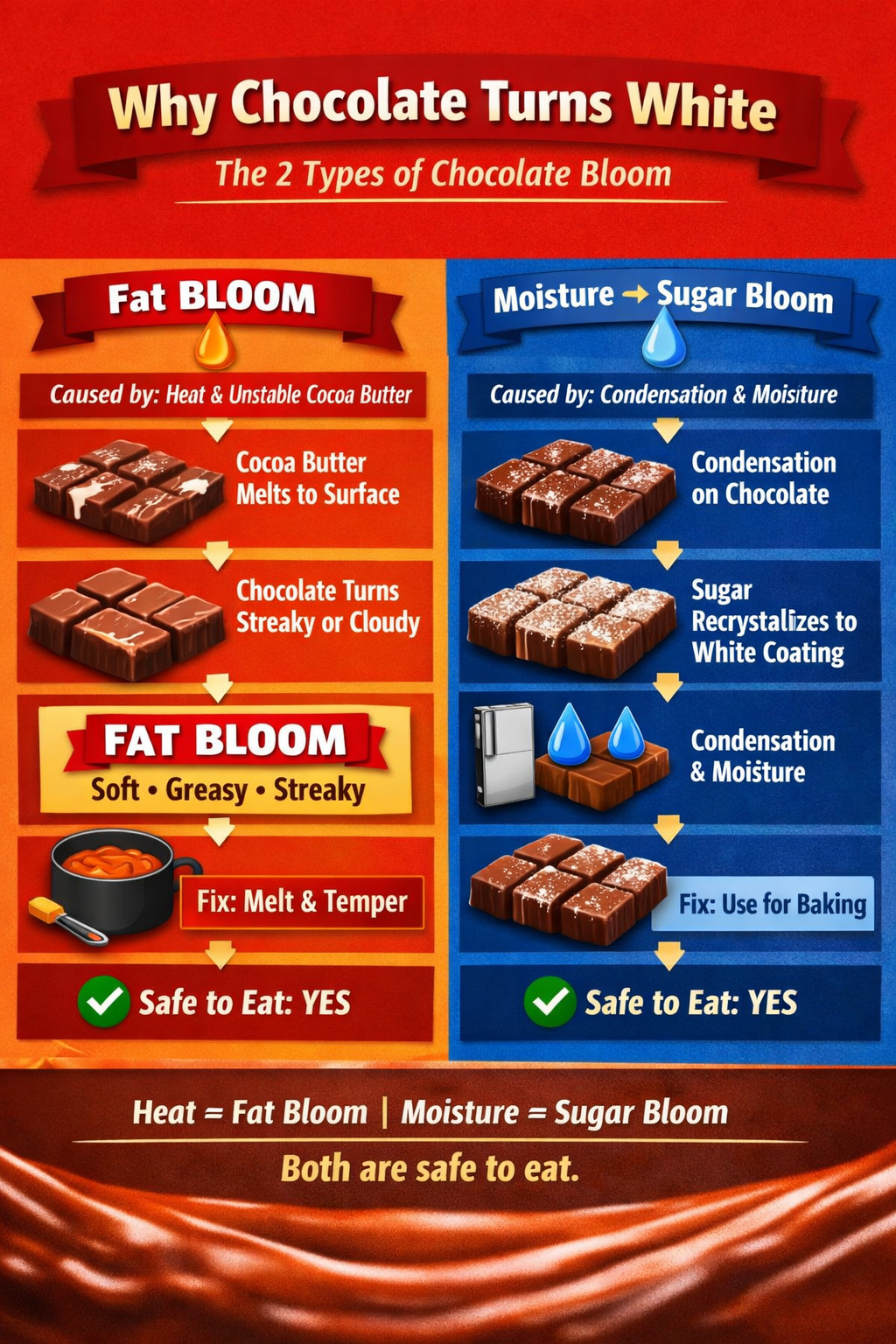
Chocolate turns white because either the cocoa butter rises to the surface (fat bloom) or sugar crystals form after moisture touches the chocolate (sugar bloom). Understanding which one you’re seeing helps you fix it — and prevent it next time.
Fat Bloom (Caused by Heat & Cocoa Butter Movement)
Fat bloom is the most common type of chocolate bloom and is directly tied to temperature changes.
What Fat Bloom Looks Like
- Soft, streaky, cloudy white patches
- Slightly greasy or waxy feel
- Often appears on chocolate chips, bars, or melted‑and‑re‑solidified chocolate
What Causes Fat Bloom
- Chocolate stored too warm
- Temperature swings (warm → cool → warm)
- Chocolate melted and cooled without proper tempering
- Cocoa butter separating and rising to the surface
Is Fat Bloom Safe to Eat?
Yes — fat bloom is harmless. The texture may be softer or crumbly, but the chocolate is still great for baking, melting, and cooking.
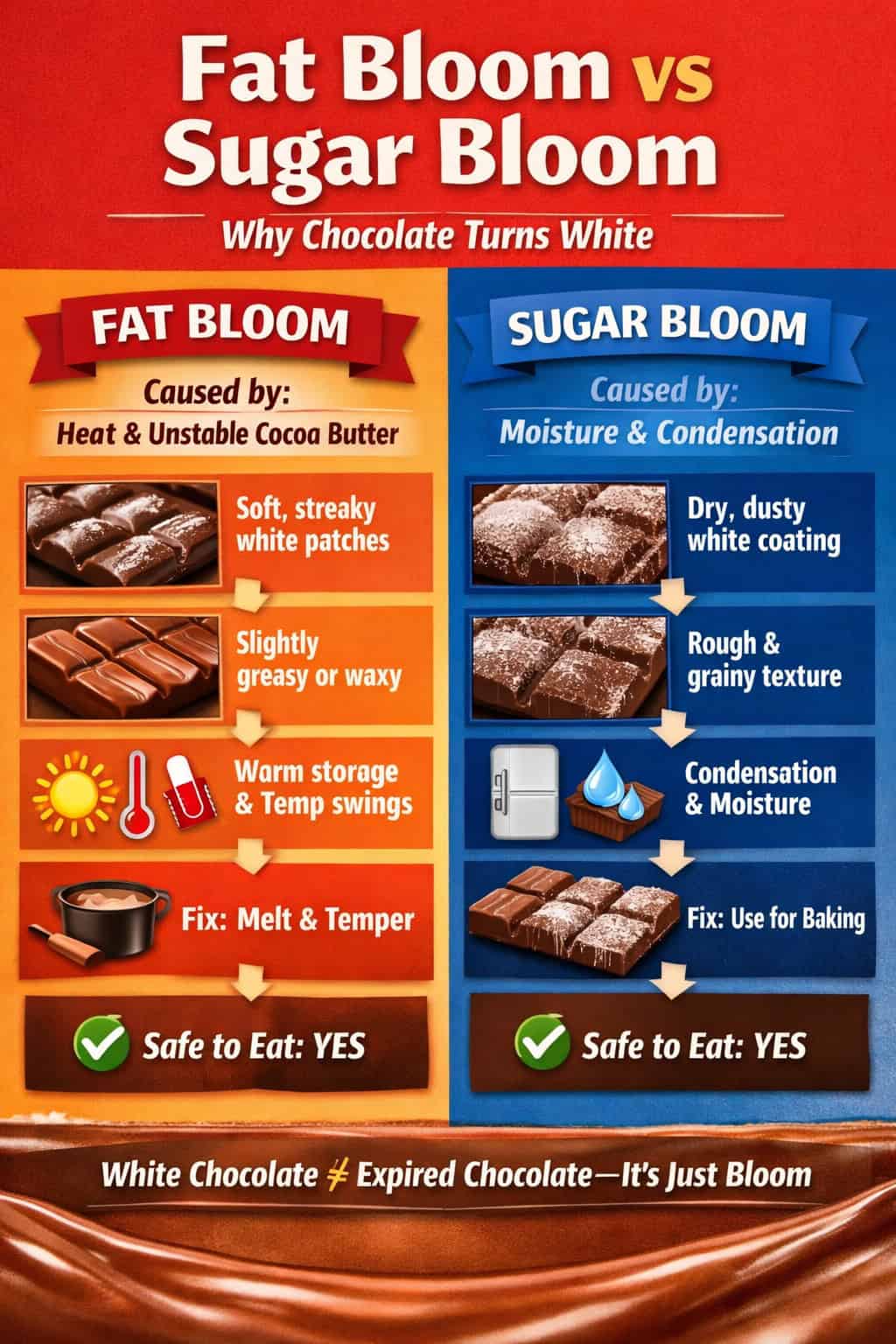
Sugar Bloom (Caused by Moisture & Condensation)
Sugar bloom happens when moisture touches chocolate, dissolving sugar on the surface.
What Sugar Bloom Looks Like
- Dry, dusty, powdery white coating
- Rough or sandy texture
- Often appears after refrigeration or condensation
What Causes Sugar Bloom
- Condensation forming on surface of the chocolate
- Moisture dissolving sugar
- Sugar recrystallizing into a white, gritty layer
Is Sugar Bloom Safe to Eat?
Yes — sugar bloom is safe, but the texture becomes gritty. It’s best used in baking rather than dipping or snacking.
How to Fix Chocolate Bloom
You can fix fat bloom, but sugar bloom is permanent.
How to Fix Fat Bloom
Fat bloom can often be reversed by melting and re‑tempering the chocolate.
- Melt gently
- Re‑temper using the microwave method
- Use immediately for dipping, drizzling, or molding
How to Use Sugar‑Bloomed Chocolate
Sugar bloom can’t be undone, but the chocolate is still perfect for:
- Brownies
- Cookies
- Cakes
- Ganache
- Hot chocolate
- Frosting
Avoid using sugar‑bloomed chocolate for dipping — the texture won’t smooth out.
How to Prevent Chocolate Bloom
Prevention is easier than fixing bloom — especially sugar bloom.
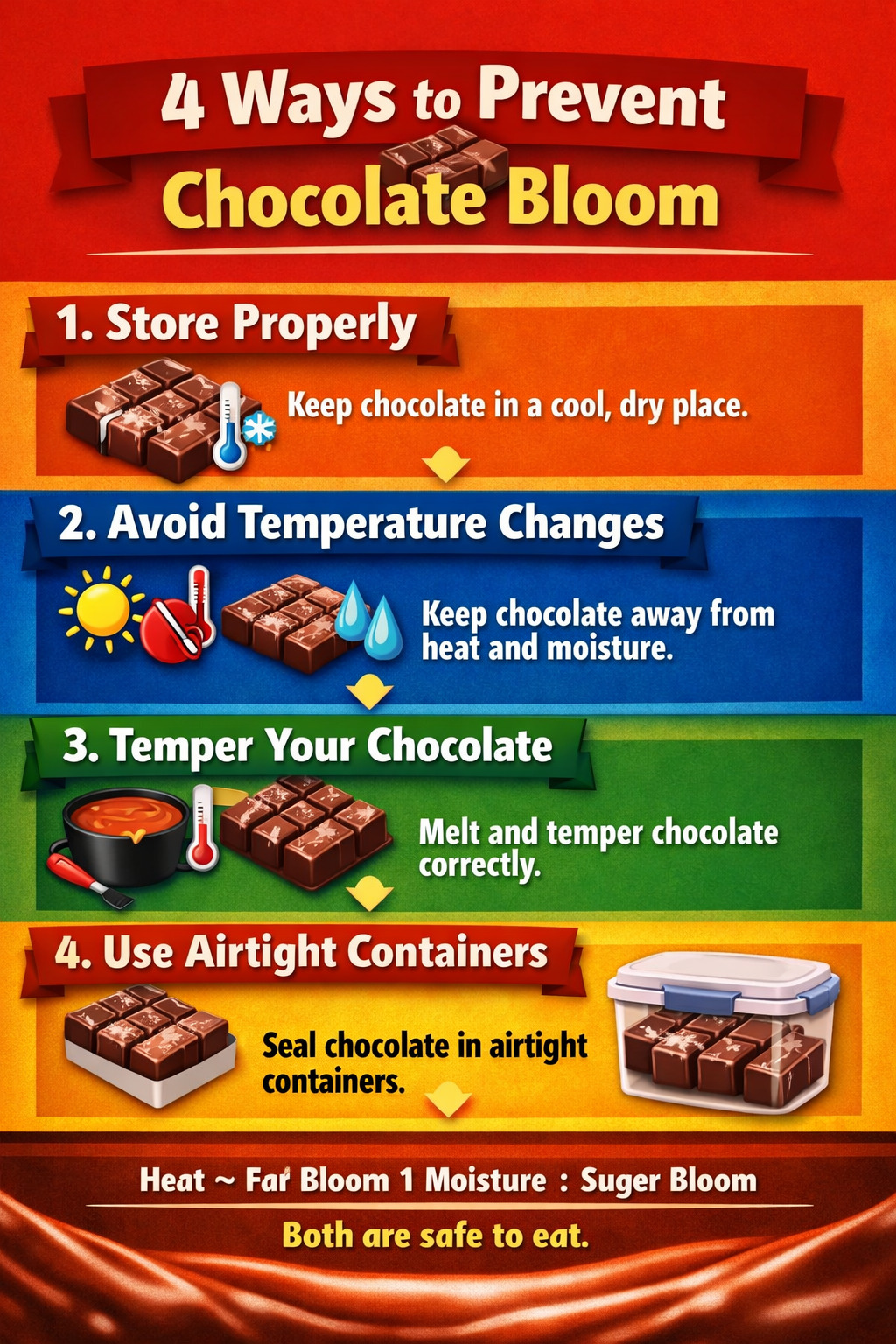
Store Chocolate at the Right Temperature
- Ideal range: 60–70°F (15–21°C)
- Storage conditions: Keep away from heat, sunlight, and high humidity and low humidity
- Store in a cool, dark pantry
- Internal link: How to Store Chocolate
Avoid Refrigeration When Possible
Refrigerators cause condensation → condensation causes sugar bloom. If you must store in the fridge:
- Wrap tightly
- Place in an airtight container
- Let it come to room temp before unwrapping
Temper Chocolate Correctly
Proper tempering stabilizes cocoa butter crystals and prevents fat bloom. Internal link: How to Temper Chocolate
Keep Chocolate Dry While Melting
Moisture is the #1 cause of sugar bloom.
- Keep bowls and spatulas completely dry
- Avoid steam from double boilers
- Don’t melt chocolate over boiling water Internal link: How to Melt Chocolate
- Thermometer → Store at 60–70°F
- Storage box → Keep airtight
- Droplet with slash → Keep chocolate dry
- Chocolate bar → Temper properly
Is Bloomed Chocolate Safe to Eat?
Yes — both fat bloom and sugar bloom are safe. Bloom affects appearance and texture, not food safety.
Only discard chocolate if it smells:
- Sour
- Musty
- Rancid
Best Ways to Use Bloomed Chocolate
Bloomed chocolate is perfect for:
- Brownies
- Cookies
- Cakes
- Muffins
- Ganache
- Hot chocolate
- Chocolate sauces
- Frosting
Anything melted or baked is fair game.
Chocolate Bloom FAQ
Does chocolate bloom mean it’s expired?
No — bloom is cosmetic. Expired chocolate smells off or tastes stale.
Can you still temper bloomed chocolate?
Yes — it can be melted and re‑tempered.
Why do chocolate chips turn white?
Usually fat bloom from warm storage or temperature swings.
Does white chocolate bloom differently?
White chocolate is more prone to fat bloom because it’s mostly cocoa butter.
Chocolate bloom might look mysterious, but now you know it’s just chocolate doing its natural dance with heat and moisture. With a little care — and proper tempering — your chocolate will stay glossy, smooth, and ready for every melt‑in‑your‑mouth moment.