How to Avoid Overmixing (Baking 101 Guide)
Learning how to prevent overmixing is the secret to soft, tender bakes every time. If you’ve ever pulled a batch of muffins out of the oven and wondered why they’re rubbery… or sliced into a cake that looked perfect but felt dense and tight… chances are, the batter was overmixed. Learning how to avoid overmixing is one of the most important lessons in baking — it’s the key to achieving soft, tender textures and consistent results every time.
Understanding what overmixing in baking really means helps you spot the signs before your batter turns tough. When you know how to mix batter correctly, you’ll prevent gluten from over‑developing and keep your cakes, cookies, and quick breads light and fluffy. Once you recognize the signs of overmixed batter, you’ll know exactly how to prevent overmixing — and your bakes will rise beautifully instead of falling flat. If you want a deeper look at proper mixing methods, King Arthur Baking has a great beginner‑friendly guide on how to mix cake batter correctly.
If you’re just starting your Baking 101 journey, you might also love:
What Is Overmixing (and Why It Matters)
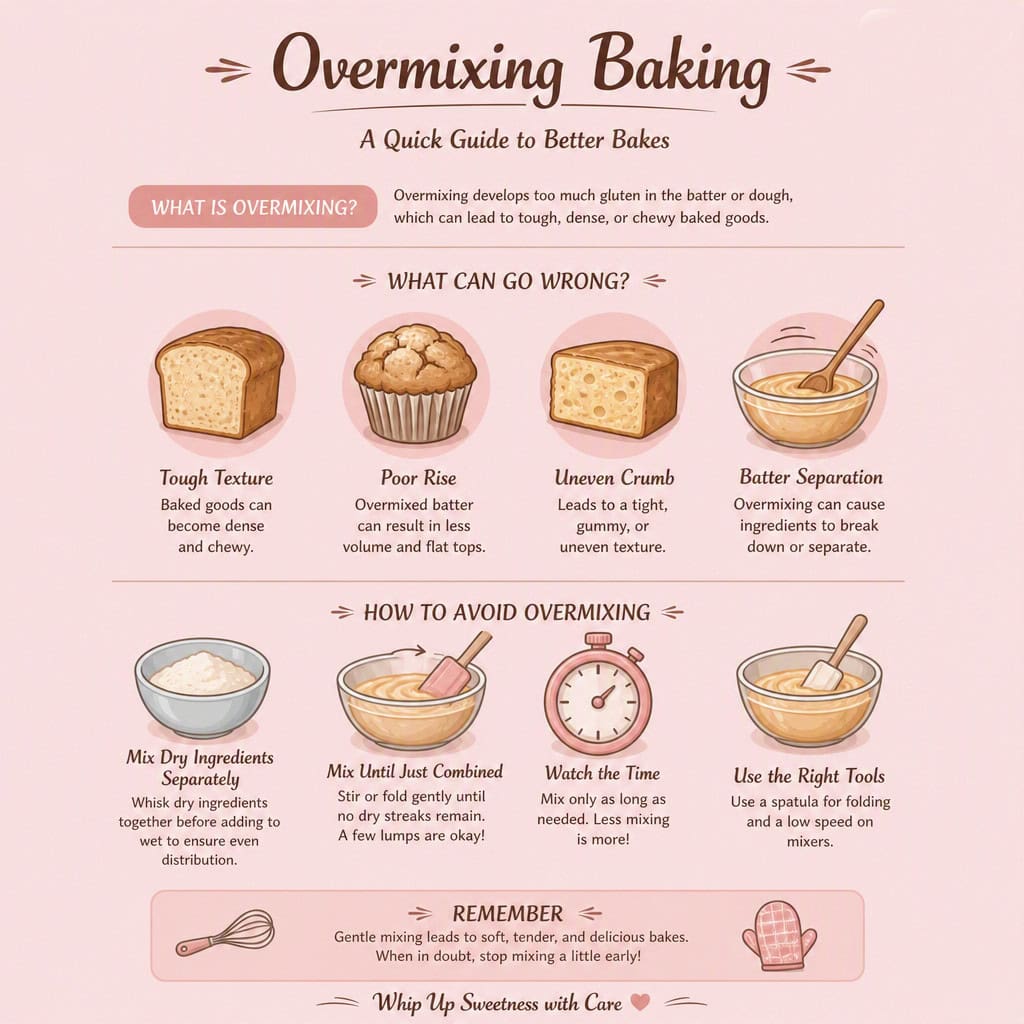
Overmixing happens when you stir, beat, or fold your batter past the point of being just combined. Once flour hits the bowl, every extra turn develops gluten — the stretchy network that gives baked goods structure. A little gluten is good. Too much makes your treats tough, dense, or rubbery.
Two things happen when you overmix:
- Gluten develops too much → chewy, dense textures
- Air gets knocked out → flat cookies, sunken cakes, tight crumbs
This is why recipes say “mix until just combined.” It’s not being fussy — it’s protecting the texture.
What Happens Inside Your Batter When You Overmix
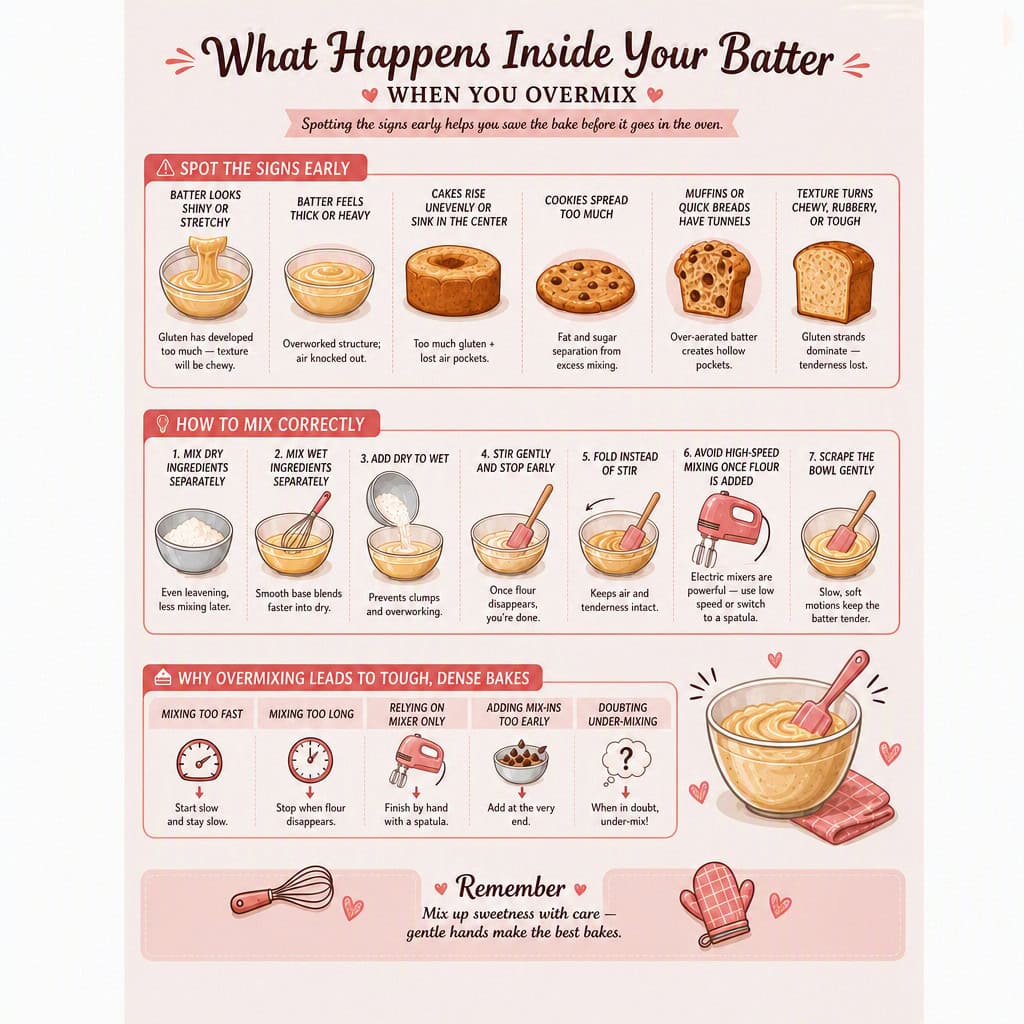
Before we dive into the steps, let’s talk about how to prevent overmixing — it starts with understanding what’s happening inside your batter. Spotting the signs early helps you save the bake before it goes in the oven.
- Batter looks shiny or stretchy
- Batter feels thick or heavy
- Cakes rise unevenly or sink in the center
- Cookies spread too much
- Muffins or quick breads have tunnels
- Texture turns chewy, rubbery, or tough
If you’ve seen any of these, you’re not alone — every baker has.
Simple Techniques to Help You Avoid Overmixing
Mix dry ingredients separately
This distributes leaveners and reduces the mixing needed later.
Mix wet ingredients separately
When the wet ingredients are smooth first, they blend into the dry faster.
Add dry to wet
This prevents clumps and keeps the batter from being overworked.
Stir gently and stop early
As soon as the flour disappears, you’re done.
Fold instead of stir
Perfect for muffins, quick breads, and pancakes.
Avoid high‑speed mixing once flour is added
Electric mixers are powerful — use low speed or switch to a spatula.
Scrape the bowl gently
Slow, soft motions keep the batter tender.
Why You Should Always Avoid Overmixing
Why Overmixing Leads to Tough, Dense Bakes
These simple habits make a huge difference:
- Start slow and stay slow
- Stop mixing as soon as the flour disappears
- Finish by hand with a spatula
- Fold delicate batters
- Add mix‑ins at the very end
- When in doubt, under‑mix
Your batter will thank you.
Signs of Overmixed Batter
Here’s the part most beginners don’t realize: sometimes you do need to mix more — just not after the flour goes in. Certain steps in baking actually rely on extra mixing to create structure, lift, and texture. Knowing the difference is what turns “I hope this works” into “I know exactly what I’m doing.”
1. Creaming Butter and Sugar
This is one of the few times you want to mix aggressively.
Beating butter and sugar together traps air, which helps cakes and cookies rise.
Light, fluffy, pale — that’s the goal.
2. Whipping Egg Whites
Egg whites need strong, fast mixing to build volume.
This is how you get stiff peaks for meringues, soufflés, and airy cakes.
3. Whipping Heavy Cream
Just like egg whites, cream needs vigorous mixing to thicken and hold shape.
Stop at soft or stiff peaks depending on the recipe.
4. Emulsifying Wet Ingredients
Some batters (like brownies or oil‑based cakes) need thorough mixing before the flour is added.
This helps the fat, eggs, and sugar blend smoothly so the final texture is even.
5. Mixing Yeast Doughs
Bread dough is the opposite of cake batter — it needs kneading to develop gluten.
This is one place where strength and time matter.
When You Should Mix More
Not all mixing is bad — some steps actually need more power.
Creaming butter + sugar
You want it light, pale, and fluffy.
Whipping egg whites
Strong mixing builds volume and structure.
Whipping heavy cream
Same idea — air = lift.
Emulsifying wet ingredients
Brownies and oil‑based cakes need thorough mixing before flour is added.
Yeast doughs
Bread dough is the opposite of cake batter — it needs kneading.
Quick Fixes If You Think You Overmixed
It happens. Here’s how to soften the damage:
- Let the batter rest 10–20 minutes
- Switch to a smaller pan
- Reduce bake time slightly
- Add mix‑ins to break up density
- Repurpose the batter (snack cake, sheet cake, bars)
- Remember: flavor is still delicious
Final Tips for Soft, Tender Bakes
Soft, tender bakes aren’t about perfection — they’re about paying attention to the little cues your batter gives you. Once you learn to mix gently, stop early, and trust the “just combined” stage, everything you bake becomes lighter, fluffier, and more consistent.
Remember, how to prevent overmixing isn’t about perfection — it’s about gentle care and trusting your batter.
A few reminders to keep close:
- Flour is sensitive — treat it gently
- Slow mixing beats fast mixing
- Folding protects air
- Slightly under‑mixed is usually perfect
- Visual cues matter more than timing
ou’re building real baking confidence here, one skill at a time. And now that you know how to avoid overmixing, you’re already baking softer cakes, fluffier muffins, and cookies that hold their shape like a dream.
Ready for your next foundational skill?
- How to Measure Flour Correctly
- How to Soften Butter the Right Way
- Butter & Fats: How They Affect Texture + Smart Swaps
- How to Make Perfect Brown Butter
- Leaveners 101: Baking Soda vs Baking Powder (How They Actually Work)