Choosing the Right Chocolate for Baking – Chocolate 101
Choosing the right chocolate for baking starts with understanding cacao percentages, chocolate types, and overall quality. Whether you’re comparing budget vs premium chocolate or trying to figure out the best chocolate for baking specific recipes, knowing what to look for makes a huge difference in flavor and texture.
This guide breaks down chocolate percentages, types of chocolate for baking, and when it’s worth splurging so you can bake with confidence every time. Let’s go!
Let’s Start With the Cacao Percentage
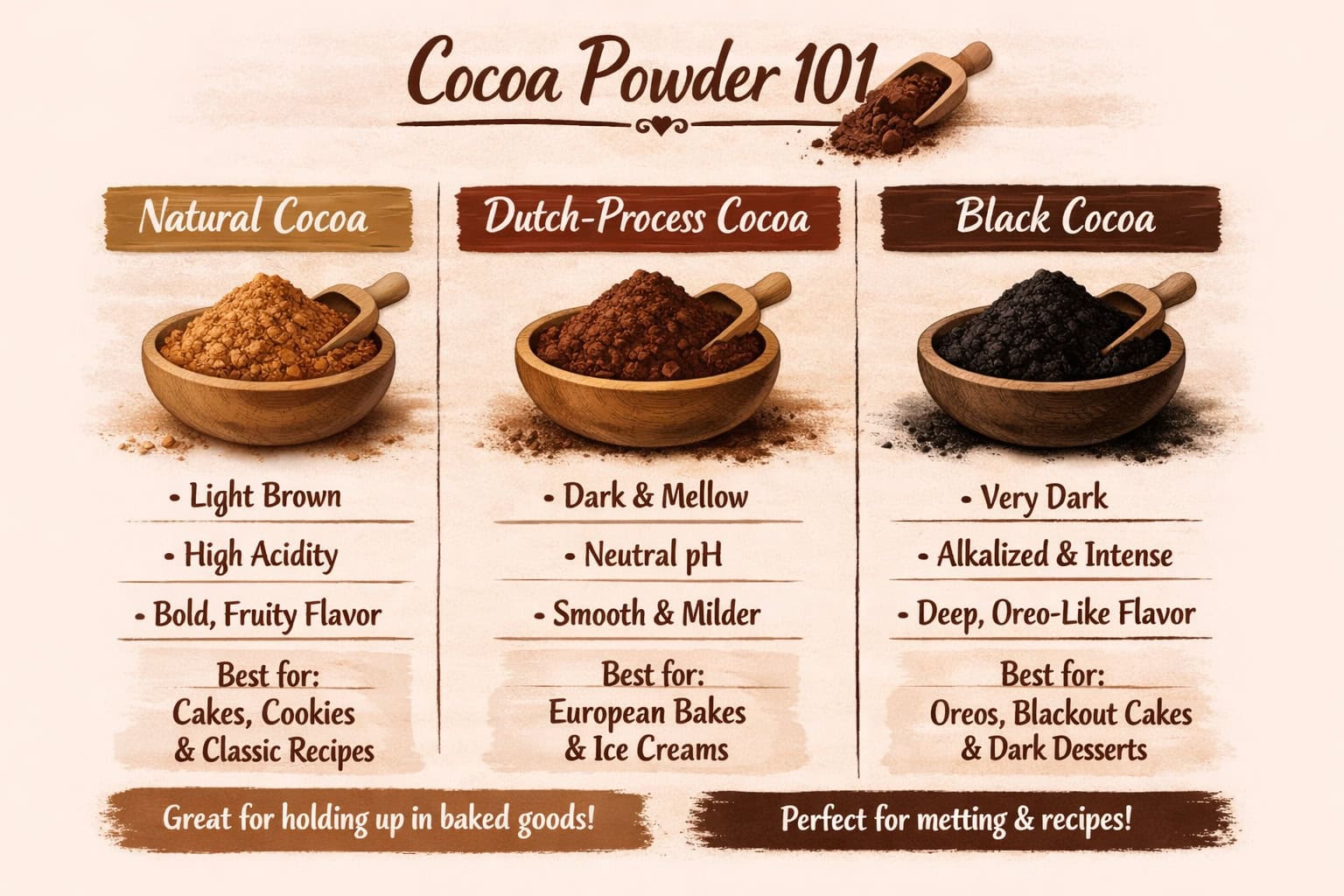
Just like cacao percentages change the intensity of solid chocolate, each type of cocoa powder lines up with a similar flavor profile. Natural cocoa has a brighter, sharper chocolate flavor — similar to using a 40–55% semi‑sweet chocolate, with lighter color and more acidity. Dutch‑process cocoa is smoother, darker, and less acidic, giving you a deeper flavor that behaves more like a 60–70% dark chocolate. Black cocoa is ultra‑dark, low‑acid, and intensely flavored, offering the bold, bittersweet punch you’d expect from a 70–85% bittersweet chocolate. Choosing the right cocoa powder lets you control the same things you adjust with cacao percentages: sweetness, intensity, color, and overall chocolate payoff.
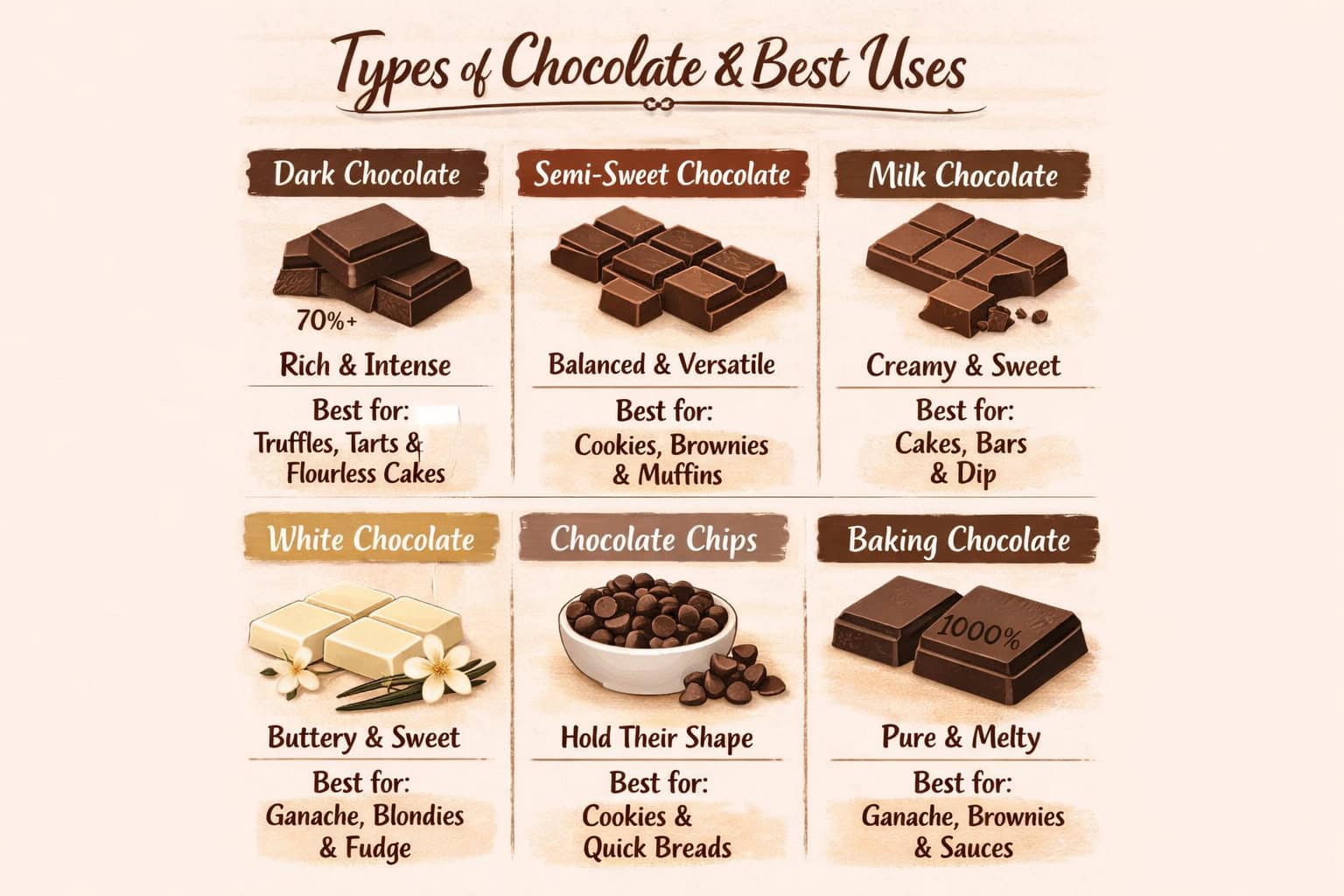
Start With the Cacao Percentage
Balanced sweetness; great for cookies, brownies, and everyday baking.
Richer, deeper flavor; ideal for ganache, truffles, and flourless cakes.
Bold, intense, slightly bitter; best for sophisticated, less‑sweet desserts.
Check the Ingredients List
High‑quality chocolate has a short, simple ingredient list — and once you know what to look for, it becomes incredibly easy to spot the good stuff. Real chocolate is made from just a few core ingredients, and each one plays a role in flavor, texture, and meltability. When the label starts getting long or filled with unfamiliar additives, that’s usually a sign the chocolate won’t melt smoothly or taste as rich. A quick glance at the ingredients can tell you whether you’re getting silky, cocoa‑butter‑based chocolate… or a waxy, overly processed bar that won’t behave well in baking.
Check the Ingredients List
High‑quality chocolate uses cocoa butter as the main fat — it melts smoothly and tastes rich.
The best chocolate usually contains cocoa mass, cocoa butter, sugar, vanilla, and lecithin.
Oils like palm or soybean create waxy texture and poor melting — skip chocolates with added oils.
These aren’t real chocolate and won’t melt or taste the same — they’re made with cheaper fats.
Choose the Right Form: Bars vs. Chips vs. Wafers
Choosing the right form of chocolate can make a big difference in how your recipe turns out. Bars, chips, and wafers may all taste like chocolate, but they behave very differently when heated, mixed, or melted. Some melt into silky‑smooth perfection, while others are designed to hold their shape in cookies or add structure to baked goods. Here’s a quick guide to help you pick the best form of chocolate for whatever you’re making.
Choose the Right Form: Bars vs. Chips vs. Wafers
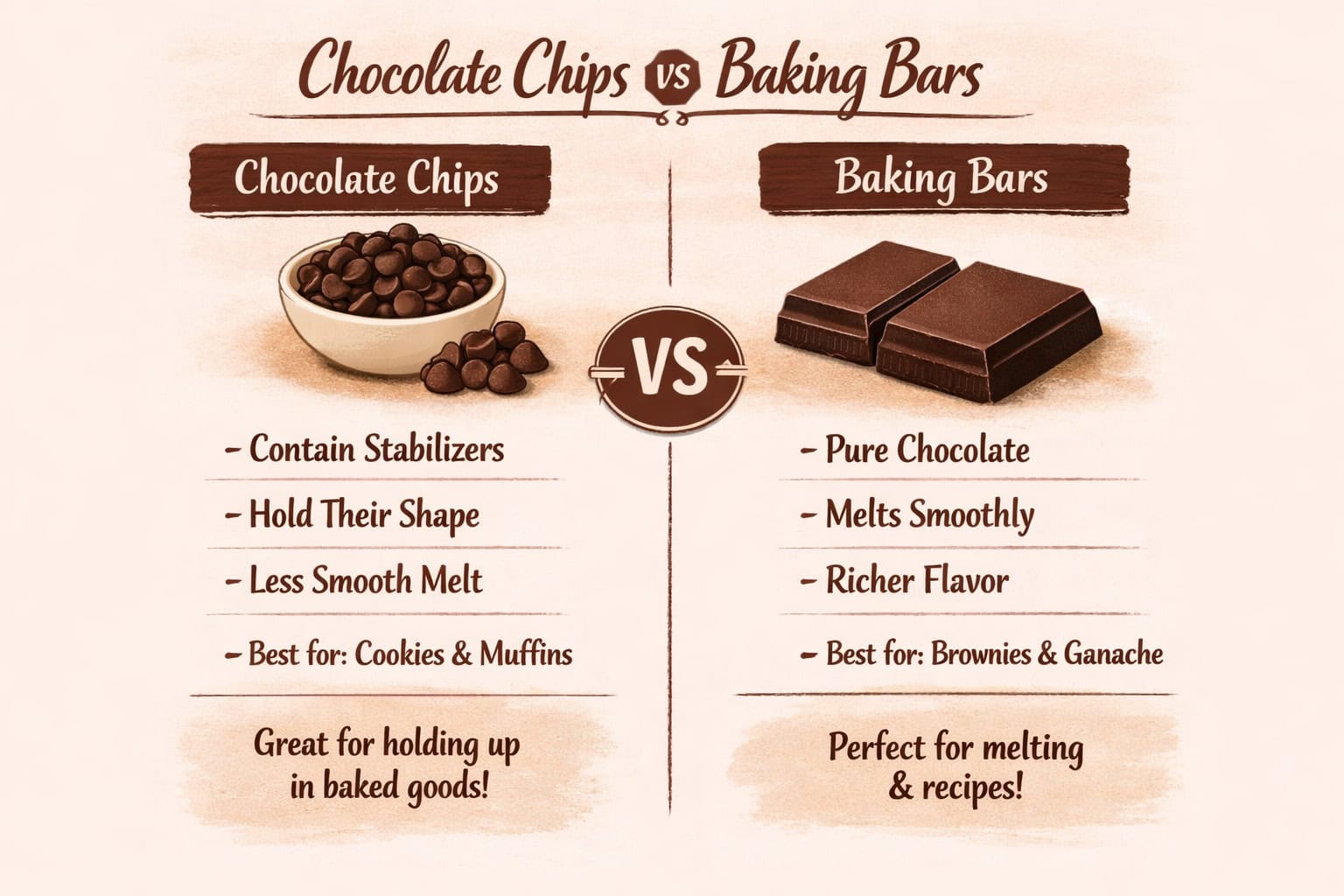
Best for melting, ganache, truffles, and smooth finishes. Bars melt evenly and give the silkiest texture.
Designed to hold their shape — perfect for cookies and mix‑ins, but not ideal for smooth melting.
Melt quickly and evenly; ideal for tempering, dipping, coating, and any glossy chocolate finish.
Match the Chocolate to the Recipe
Not all chocolate behaves the same in every dessert, and choosing the right type can make the difference between a silky ganache, a fudgy brownie, or a cookie that spreads just right. Each recipe benefits from a specific style of chocolate — some need higher cacao percentages for depth, while others rely on chips that hold their shape or bars that melt smoothly. Once you know which chocolate pairs best with each kind of bake, your desserts instantly become more consistent, flavorful, and foolproof.
Use 55–70% dark chocolate for rich, fudgy flavor and a deep cocoa profile.
Semi‑sweet chips or chopped dark chocolate hold their shape and give the best gooey pockets.
Choose high‑quality 60–70% dark chocolate with cocoa butter for silky, luxurious texture.
Tempered chocolate or melting wafers give the smoothest, glossiest finish without seizing.
Use 50–60% dark chocolate for balanced sweetness and a tender crumb.
Milk chocolate or sweet dark chocolate keeps flavors mild, creamy, and crowd‑friendly.
What About White Chocolate?
White chocolate behaves differently from dark and semi‑sweet because it contains no cocoa solids — only cocoa butter, sugar, and milk. That means it melts faster, scorches more easily, and tastes much sweeter. But when you choose a high‑quality bar with real cocoa butter, white chocolate can add incredible creaminess, smoothness, and vanilla‑forward flavor to your desserts.
What About White Chocolate?
High‑quality white chocolate uses cocoa butter as the main fat — avoid anything made with palm oil or “white coating.”
A higher cocoa butter percentage melts smoother, tastes richer, and gives a silkier texture.
Perfect for ganache, mousse, frosting, blondies, drizzles, and no‑bake treats.
White chocolate burns quickly — use low heat, short bursts, and lots of stirring.
Budget vs. Premium Chocolate: What’s Worth Paying For?
Chocolate varies widely in quality, and understanding those differences helps you get the best flavor for your money. The difference usually comes down to the quality of the cocoa beans, how the chocolate is processed, and whether it uses real cocoa butter or cheaper substitute fats. Understanding what you’re paying for helps you choose chocolate that fits your recipe and your budget, without sacrificing flavor.
Quick Chocolate Buying Cheat Sheet
Choose chocolate with real cocoa butter and a cacao percentage that fits your recipe (55–70% for most baking).
Use bars or wafers — they melt smoother and more evenly than chips.
Semi‑sweet chips or chopped chocolate hold their shape and create gooey pockets.
Choose mid‑range or premium chocolate with 60–70% cacao for silky, luxurious texture.
Use wafers or couverture chocolate for a glossy, smooth, professional finish.
Look for real cocoa butter (28%+), not palm oil or “white coating.”
Use inexpensive chocolate for cookies and kids’ treats; save premium chocolate for recipes where flavor truly shines.
Great for cookies, muffins, and everyday baking.
Brands: Hershey’s, Nestlé, Baker’s, Aldi Choceur.
Smooth melt, real cocoa butter, reliable flavor.
Brands: Ghirardelli, Guittard, Lindt, Trader Joe’s Pound Plus.
Exceptional flavor, higher cocoa butter, perfect for special desserts.
Brands: Valrhona, Callebaut, Scharffen Berger, TCHO.
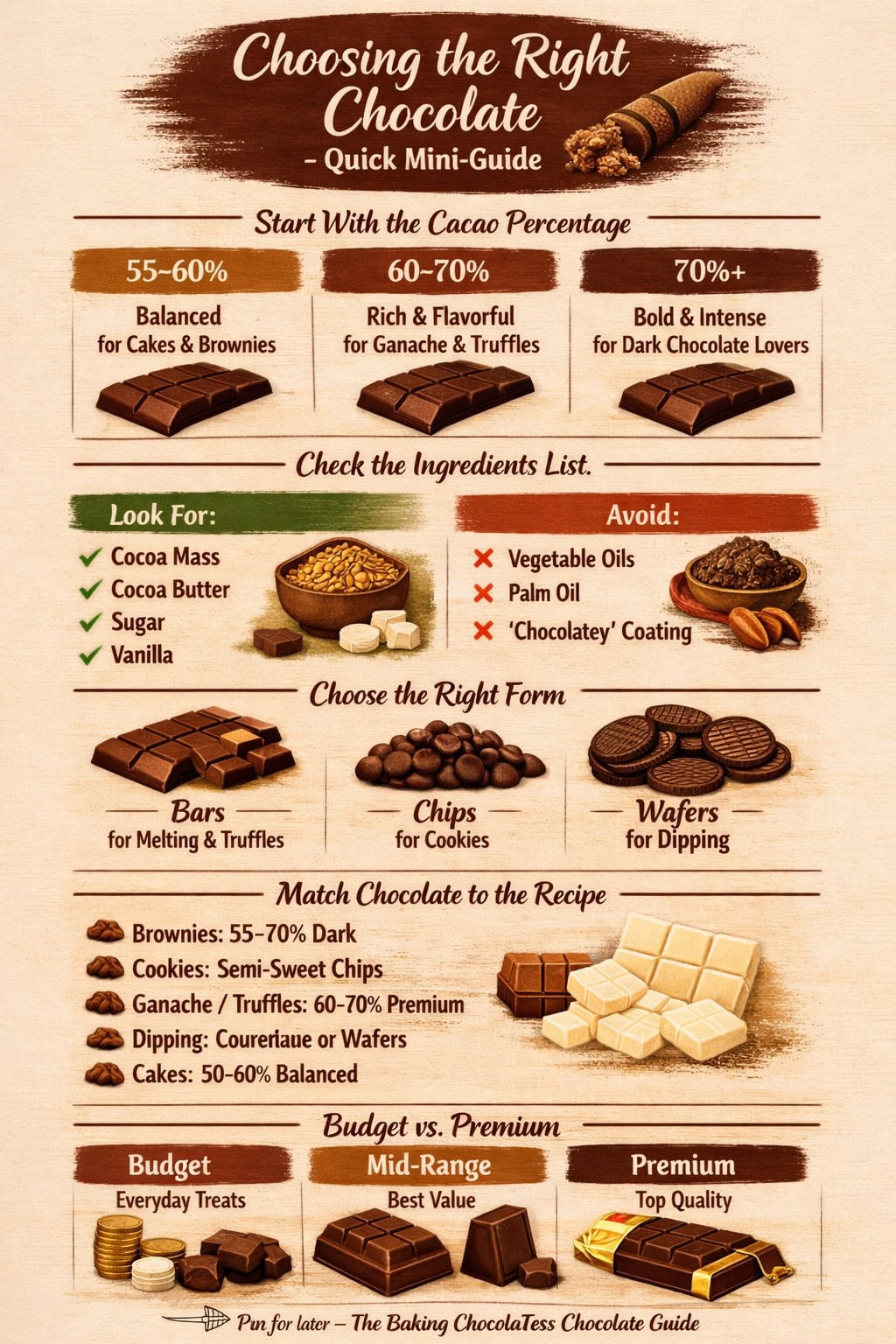
Choosing the Right Chocolate — Quick Mini‑Guide
1. Start With the Cacao Percentage
- 55–60%: balanced, great for cakes & brownies
- 60–70%: richer, deeper flavor for ganache & truffles
- 70%+: bold, intense, best for dark‑chocolate lovers
2. Check the Ingredients List
- Look for: cocoa mass, cocoa butter, sugar, vanilla
- Avoid: vegetable oils, palm oil, “chocolatey coating”
- Shorter ingredient lists = higher quality
3. Choose the Right Form
- Bars: best for melting, ganache, truffles
- Chips: hold their shape; great for cookies
- Wafers/Callets: melt fast; perfect for dipping & coating
4. Match Chocolate to the Recipe
- Brownies: 55–70% dark
- Cookies: semi‑sweet chips or chopped chocolate
- Ganache/Truffles: 60–70% premium chocolate
- Dipping: couverture or wafers
- Cakes: 50–60% for balanced sweetness
5. What About White Chocolate?
- Choose real cocoa butter (28%+)
- Avoid palm‑oil “white coating”
- Best for mousse, frosting, blondies, drizzles
6. Budget vs. Premium
- Budget: great for cookies & kids’ treats
- Mid‑Range: best value; great for most baking
- Premium: ideal for ganache, truffles, dipping
7. Recommended Brands
- Budget: Hershey’s, Nestlé, Baker’s, Aldi Choceur
- Mid‑Range: Ghirardelli, Guittard, Lindt, Trader Joe’s Pound Plus
- Premium: Valrhona, Callebaut, Scharffen Berger, TCHO
FAQ: Choosing the Right Chocolate for Baking
What’s the best chocolate percentage for baking?
Most recipes shine with 55–70% dark chocolate. It gives rich flavor without being too bitter or too sweet.
Can I use chocolate chips instead of chopped chocolate?
Yes — but chips are designed to hold their shape, so they won’t melt as smoothly. Great for cookies, not ideal for ganache.
Why won’t my chocolate melt smoothly?
Chips, low‑quality chocolate, or chocolate with added oils can melt lumpy or grainy. Choose bars or wafers with real cocoa butter.
Is white chocolate actually chocolate?
Yes — as long as it contains real cocoa butter. If it uses palm oil or “white coating,” it’s not true white chocolate.
Do I need premium chocolate for brownies?
Not always. Mid‑range chocolate gives the best flavor‑for‑price ratio in brownies, cakes, and frostings.
What chocolate is best for dipping?
Use couverture chocolate or melting wafers — they melt smoothly and set with a glossy finish.
Can I mix chocolate types in a recipe?
Absolutely. Combining semi‑sweet and dark chocolate adds depth and balances sweetness.
Does expensive chocolate always taste better?
Premium chocolate tastes better in recipes where chocolate is the star (ganache, truffles, mousse). For cookies and everyday treats, mid‑range or budget chocolate works beautifully.
🍫 Your Chocolate Quick Guide
🍫 Chocolate Cheat Sheet
You’re Ready to Choose Chocolate Like a Pro
Choosing the right chocolate doesn’t have to feel overwhelming — once you understand cacao percentages, ingredient quality, chocolate forms, and when to splurge (or save), you can shop with total confidence. Whether you’re baking fudgy brownies, silky ganache, or simple cookies, the right chocolate makes every dessert taste richer, smoother, and more satisfying. With this guide in hand, you’re ready to pick the perfect chocolate for any recipe and take your baking to the next level.
For more beginner‑friendly baking guides, tutorials, and troubleshooting tips, visit the full Baking 101: Tips, Techniques & Troubleshooting page.
More Chocolate 101 Guides You’ll Love:
- Chocolate 101
- Melting Chocolate 101 (Double Boiler & Microwave Methods)
- Microwave Chocolate Tempering
- Fixing Seized Chocolate
- Why Chocolate Turns White (Chocolate Bloom)
- Cocoa Powder 101