
Leaveners 101: Baking Soda vs Baking Powder (How They Actually Work)
Understanding baking soda vs baking powder is one of the quickest ways to fix flat cakes, overspread cookies, and confusing recipe fails. These tiny ingredients control lift, spread, tenderness, and even flavor — but they work very differently. In this guide, you’ll learn the difference between baking soda and baking powder, how leaveners work in baking, why baking soda needs acid to activate, and the smart baking powder substitutions that won’t ruin your recipe.
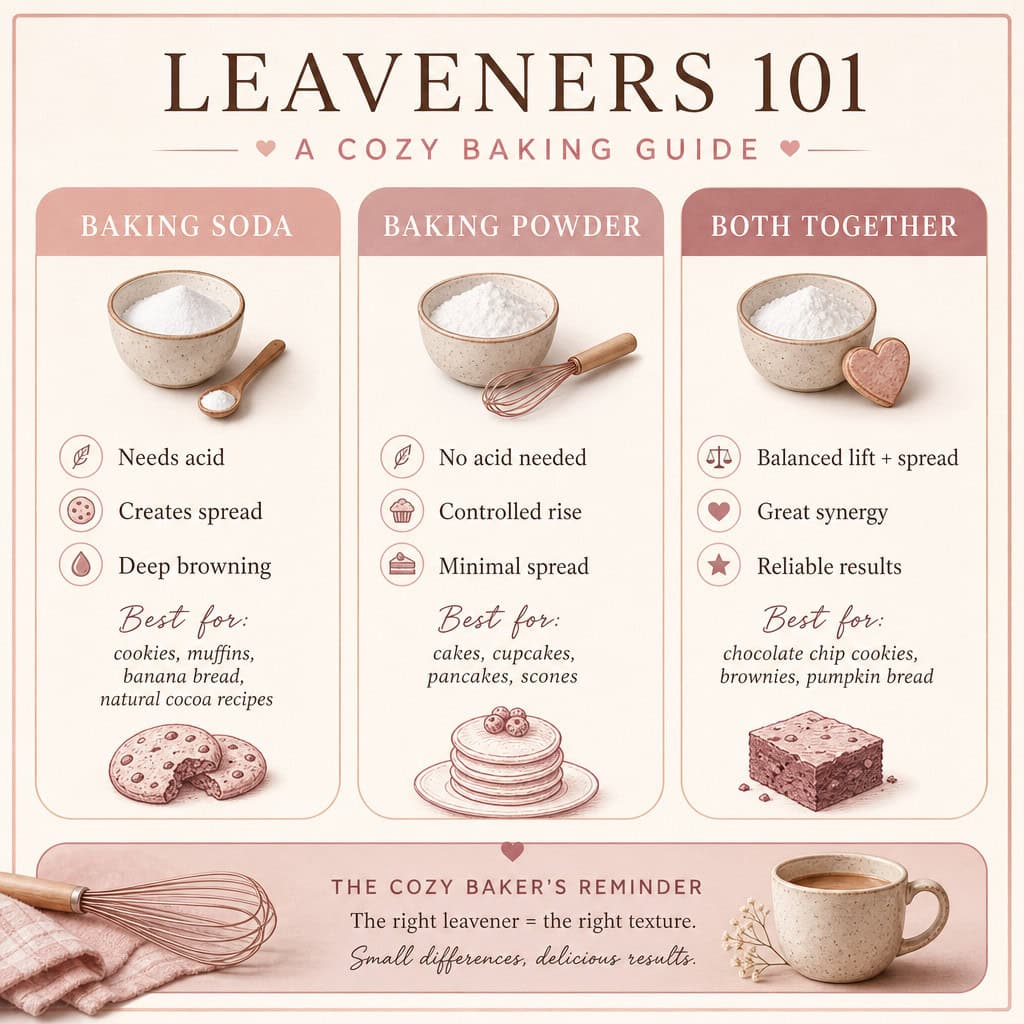
What Leaveners Actually Do (Baking Soda vs Baking Powder)
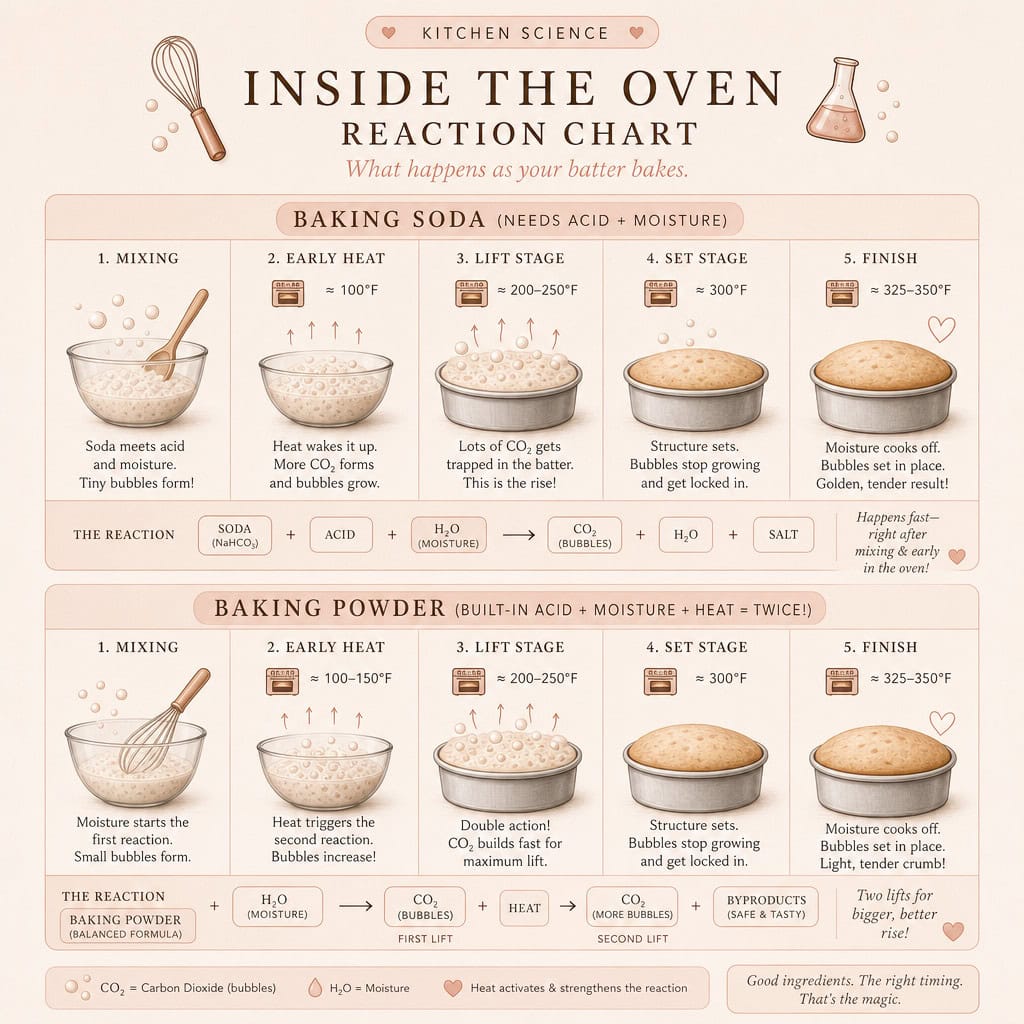
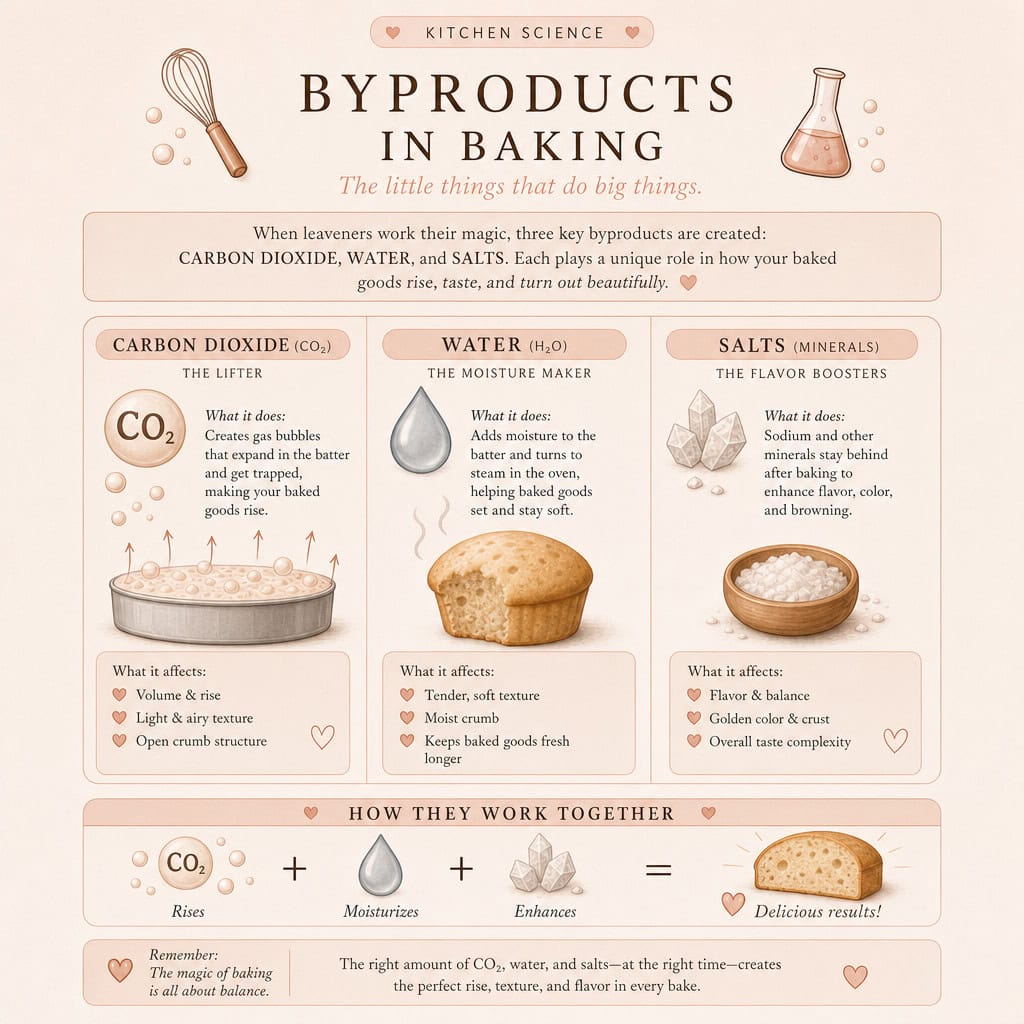
Leaveners are the quiet little powerhouses behind every soft crumb and golden edge. When baking soda or baking powder releases carbon dioxide inside your batter, it expands like tiny balloons — giving your baked goods height, tenderness, and structure. Skip or misuse them, and even the best‑mixed batter turns dense or gummy.
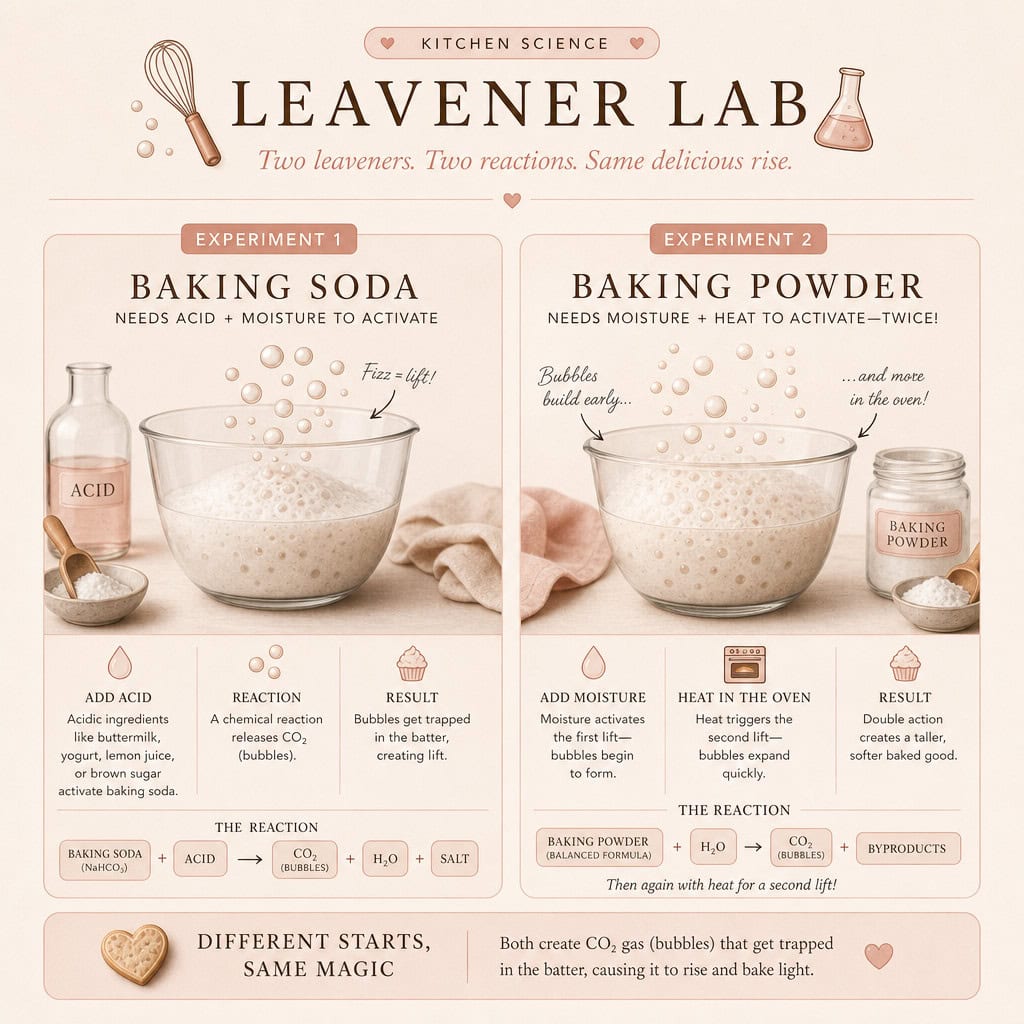
Baking Soda (Sodium Bicarbonate)
Baking soda is the fast‑acting leavener — it reacts the moment it meets acid. That quick fizz creates lift and spread, especially in cookies and muffins. Without acidity, baking soda won’t activate, leaving you with flat, bitter results.
Acids That Activate Baking Soda
- Brown sugar, buttermilk, yogurt, lemon juice, molasses, natural cocoa powder.
Best Uses
- Chocolate chip cookies, banana bread, muffins, chocolate recipes with natural cocoa.
Watch Out For
- Too much = overspreading + metallic flavor No acid = no lift
Baking Powder
Baking powder is the steady, reliable leavener — it contains both the acid and base needed to create lift. It activates twice (moisture + heat), giving cakes and pancakes their beautiful rise and tender crumb.
Types
- Single‑acting (moisture only) Double‑acting (moisture + heat)
Best Uses
- Cakes, cupcakes, pancakes, scones, biscuits.
Watch Out For
- Too much = soapy flavor Old powder = flat results
Why Some Recipes Use Both
Some recipes need both leaveners because each one brings something different. Baking powder gives height and structure, while baking soda adds spread, browning, and flavor balance. Together, they create baked goods that rise evenly and bake with the perfect mix of tenderness and chew.
Common combos: chocolate chip cookies, brownies, pumpkin bread, chocolate cakes, certain muffins.
How Leaveners Affect Brownies, Blondies & Bars
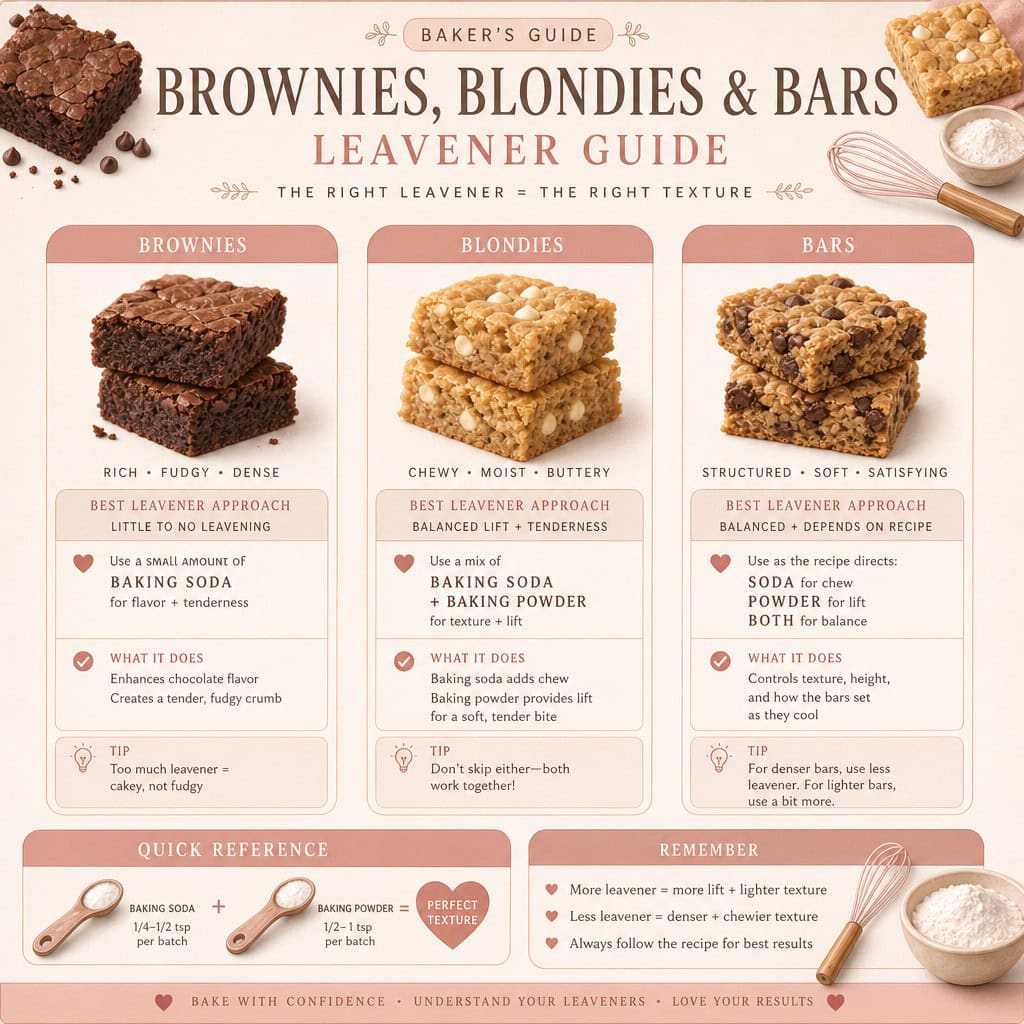
Brownies, blondies, and bars use leaveners in quieter, more strategic ways than cakes or cookies. Just a pinch here or a touch there can completely change whether your treat turns out fudgy, chewy, cakey, or perfectly dense.
Brownies
Brownies walk a tightrope between fudgy and cakey, and leaveners are the balancing act.
- A pinch of baking soda → more chew + deeper color
- A little baking powder → a taller, cakier crumb
- Natural cocoa (acidic) → activates baking soda
- Dutch‑process cocoa (neutral) → pairs better with baking powder
Blondies
Blondies rely on gentle lift without losing that gooey center.
- Mostly baking powder → soft, chewy center with slight rise
- A touch of baking soda → deeper browning + butterscotch flavor
Bars
Bars vary wildly, but the leavener rules stay simple.
- Baking powder → structure + height
- Baking soda → spread + chew + golden color
- Both together → balanced lift with that signature dense, chewy center
Smart Substitutions (That Actually Work)
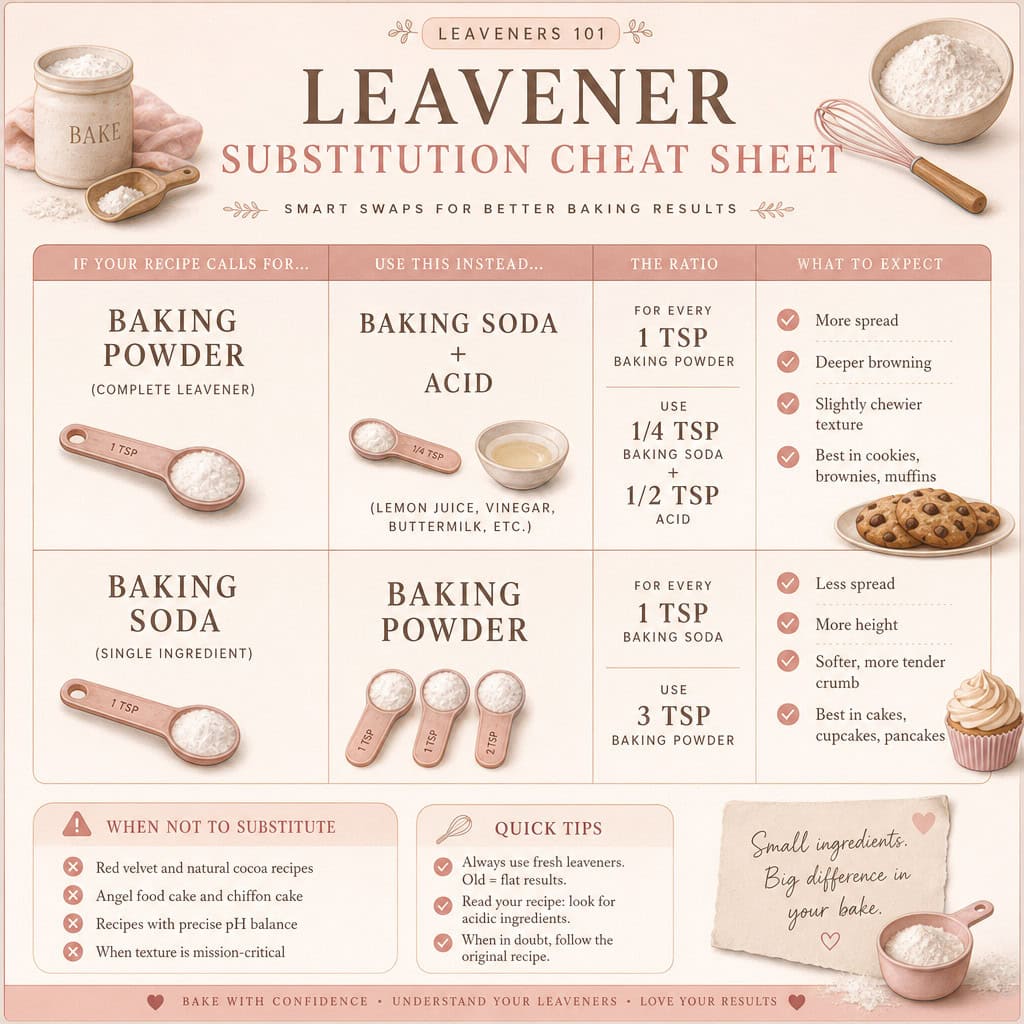
When you’re out of one leavener, don’t panic — here’s how to swap without wrecking your bake.
Baking Powder → Baking Soda
- Use ¼ tsp baking soda + ½ tsp acid (lemon juice, vinegar, buttermilk). Expect more spread + deeper browning.
Baking Soda → Baking Powder
- Use 3x the amount of baking powder. Expect less spread + more height + softer crumb.
When NOT to Substitute
- Red velvet, natural‑cocoa cakes, angel food, chiffon, or any recipe with precise pH needs.
Troubleshooting Leavener Fails
Even when you understand baking soda vs baking powder, things can still go sideways. Here’s how to decode the most common issues:
Flat Cakes
Expired leaveners, overmixed batter, too much liquid, cold oven.
Bitter or Metallic
Too much baking soda, no acidic ingredient, old cocoa/dairy.
Overspreading Cookies
Warm butter, excess soda, low‑protein flour.
Dense Muffins
Old baking powder, overmixing, too much moisture.
For a deeper dive into how ingredients behave in the oven, check out King Arthur Baking’s guide to baking science — it’s a great companion to understanding how leaveners work.
FAQ
Can I use baking powder in cookies instead of baking soda?
Yes — they’ll be puffier and softer.
Why does baking soda need acid?
It only activates when acid is present.
How do I know which leavener my recipe needs?</strong>
<p>Acid = baking soda No acid = baking powder Both = balanced lift + spread
Can I substitute baking powder for baking soda?
Yes — use 3x the amount — but expect texture changes.
Rise, Shine & Bake On
Now you’ve got the science, the sass, and the secret to perfect lift. Whether it’s brownies, blondies, or your next batch of cozy‑luxe bars, remember: baking is just chemistry wearing sprinkles. Whisk wildly, bake boldly, and let those bubbles do their happy dance.