
Why Cakes Sink: Causes and Fixes for Perfect Results
If you’ve ever pulled a cake from the oven only to watch it sink right in the middle, you’re not alone. Understanding why cakes sink is the first step to preventing it — and the good news is that most sinking issues are simple to fix.
This guide breaks down the most common reasons cakes sink in the middle, what causes those dramatic collapses, and how to fix a sunken cake so your layers bake tall, fluffy, and beautiful every time.
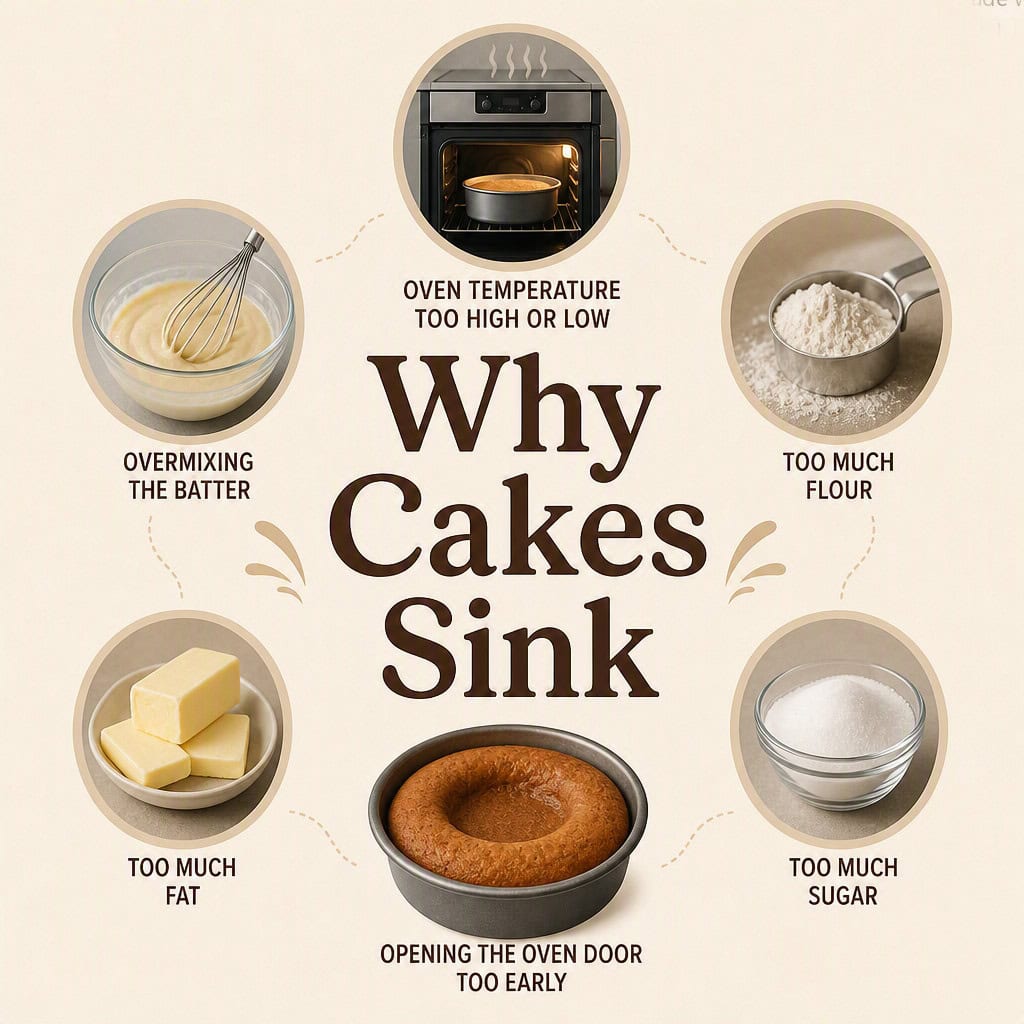
Why Cakes Sink: Causes and Fixes for Perfect Results
Cakes can collapse for a handful of sneaky reasons — but once you know what’s happening behind the scenes, you can stop sinking before it starts. Here’s your cozy little baking detective guide.
6 Reasons Cakes Sink
A cake sinks when its structure sets too slowly or collapses under its own weight. These are the most frequent causes.
Underbaking
When the center isn’t fully set, the cake can’t support itself as it cools — the classic cake sinking in the middle moment. Fix it: Bake until the center springs back, keep the oven door closed for the first 20 minutes, and use an oven thermometer.
Too Much Leavener
Extra baking powder or soda makes the cake rise fast… then collapse like it’s giving up. Fix it: Level your leaveners, replace baking powder every 6 months, and follow recipe ratios closely.
Overmixing the Batter
Too much mixing builds gluten, making the cake heavy and unstable. Fix it: Mix on low, stop as soon as everything is combined, and fold in extras gently.
Incorrect Oven Temperature
Hot spots or inaccurate temps can sabotage even perfect batter and lead to reasons cakes collapse you’d never expect. Fix it: Use an oven thermometer, bake on the center rack, and rotate only after the cake has set.
Opening the Oven Door Too Early
A quick blast of cool air interrupts the rise and can cause sinking. Fix it: Keep the door closed for the first 20 minutes and rely on your oven light instead.
Incorrect Pan Size
Too much batter in a small pan means the center won’t set before the edges brown. Fix it: Use the pan size listed in the recipe and fill pans only two‑thirds full.
Want more troubleshooting help? See my full guide: Baking 101 Tips.
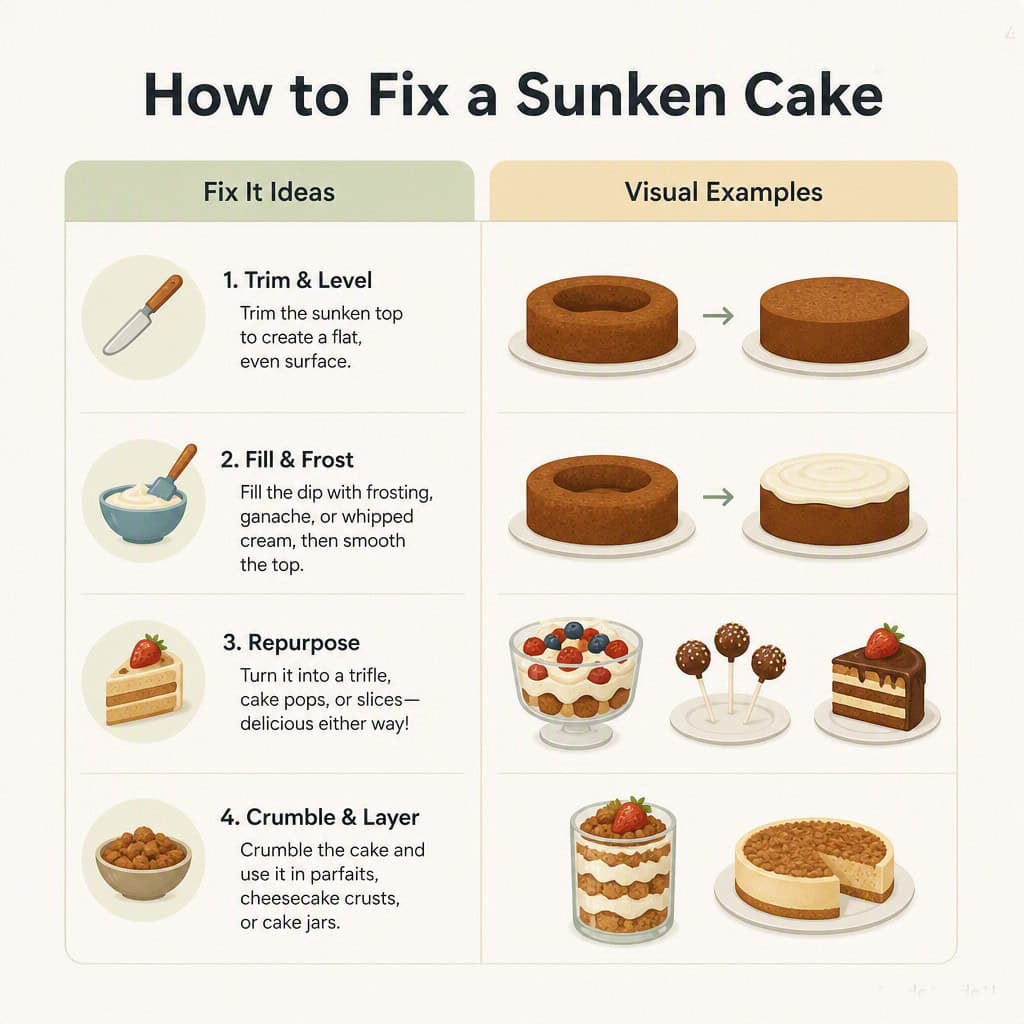
How to Fix a Sunken Cake
If your cake has already sunk, you can still salvage it.
- Trim the top and turn it into a layer cake
- Fill the center with frosting, fruit, or cream
- Use it for cake pops or trifles
- Crumble it into parfaits or ice cream toppings
FAQs
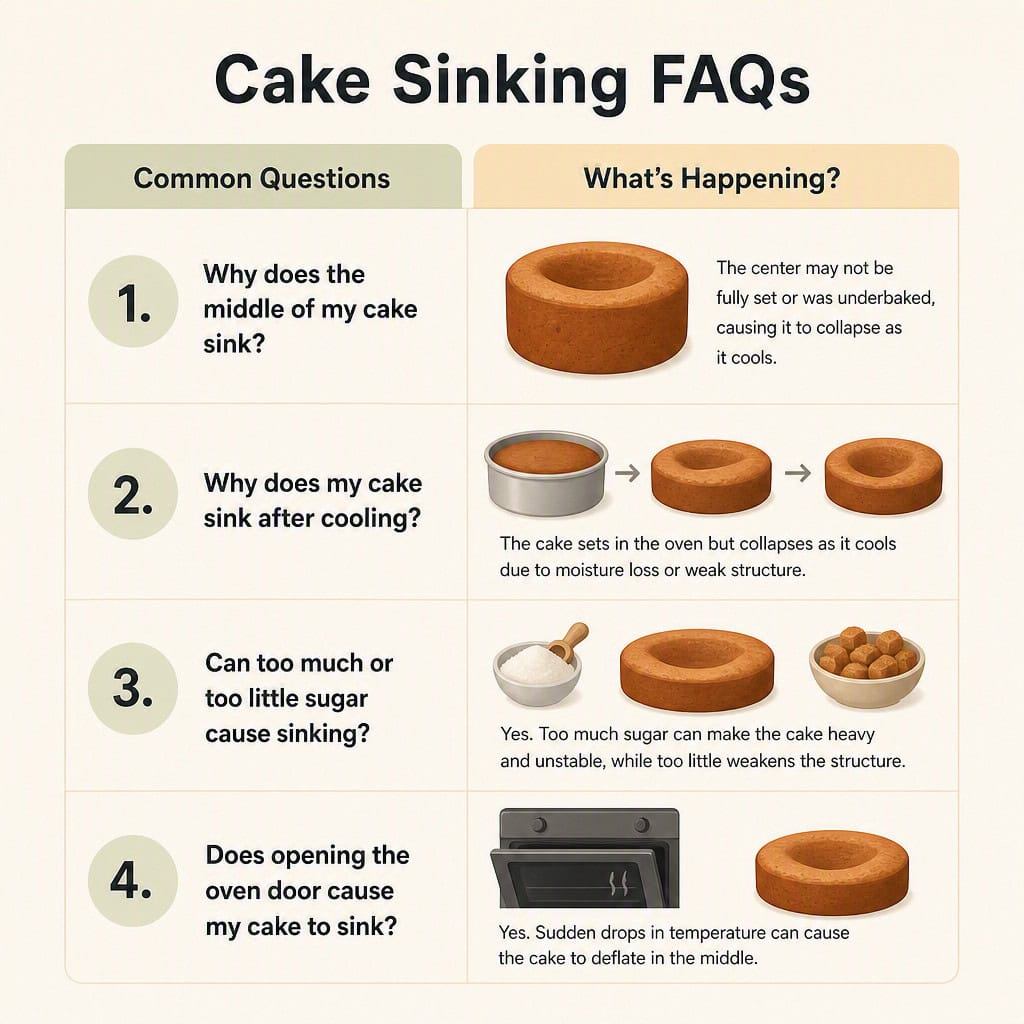
Why does my cake sink only in the middle?
The center is the last part to set. If the cake is underbaked or the oven temperature is off, the middle collapses first.
Why do my cakes sink after cooling?
Cooling reveals structural weaknesses. If the cake rose too fast or was underbaked, it will fall once removed from the oven.
Can too much sugar cause sinking?
Yes. Excess sugar weakens structure and delays setting, which can lead to collapse.
Does opening the oven door really matter?
Yes. Even a small drop in temperature during the first half of baking can interrupt the rise.
How do I know when my cake is done?
Check out 5 Expert Tips How to Tell Your Cake Is Done.
Cake sinking happens to every baker at least once — but now that you know why cakes sink, you’re already way ahead of the game. With a few simple tweaks and a little extra kitchen confidence, your cakes will rise tall, stay fluffy, and cool without collapsing in the middle.
Keep practicing, keep experimenting, and keep baking with joy. Every cake teaches you something… and every bake gets a little more magical.
More Baking Tips
- 5 Expert Tips How to Tell Your Cake Is Done
- Essential Tips for Perfect Muffin Baking
- Conversion Charts & Kitchen Tips
- Leaveners 101: Baking Soda vs Baking Powder (How They Actually Work)
- Sugar & Sweeteners in Baking: How They Affect Texture + Smart Substitutions
- How to Avoid Overmixing (Baking 101 Guide)
- Top Baking Tips for Quick Breads