
Why Cookies Spread
If you’ve ever opened your oven only to find your cookies spreading into wide, buttery puddles instead of staying thick and picture‑perfect, you’re not alone. Bakers everywhere run into this issue and wonder what causes cookies to lose their shape, even when the recipe seems perfect.
Cookie spreading is one of the most common baking mysteries, and the good news is that it usually comes down to a few predictable culprits — warm butter, low oven temperatures, not enough flour, or dough that needed a bit more chill time. Once you understand the main reasons cookies spread too much, you can fix the problem quickly and bake cookies that hold their shape every time.
Let’s break down the science, the slip‑ups, and the simple tweaks that turn cookie chaos into cookie confidence. Here’s exactly what leads to cookies spreading in the oven — and how to prevent it.
Why Cookies Spread: The Most Common Causes
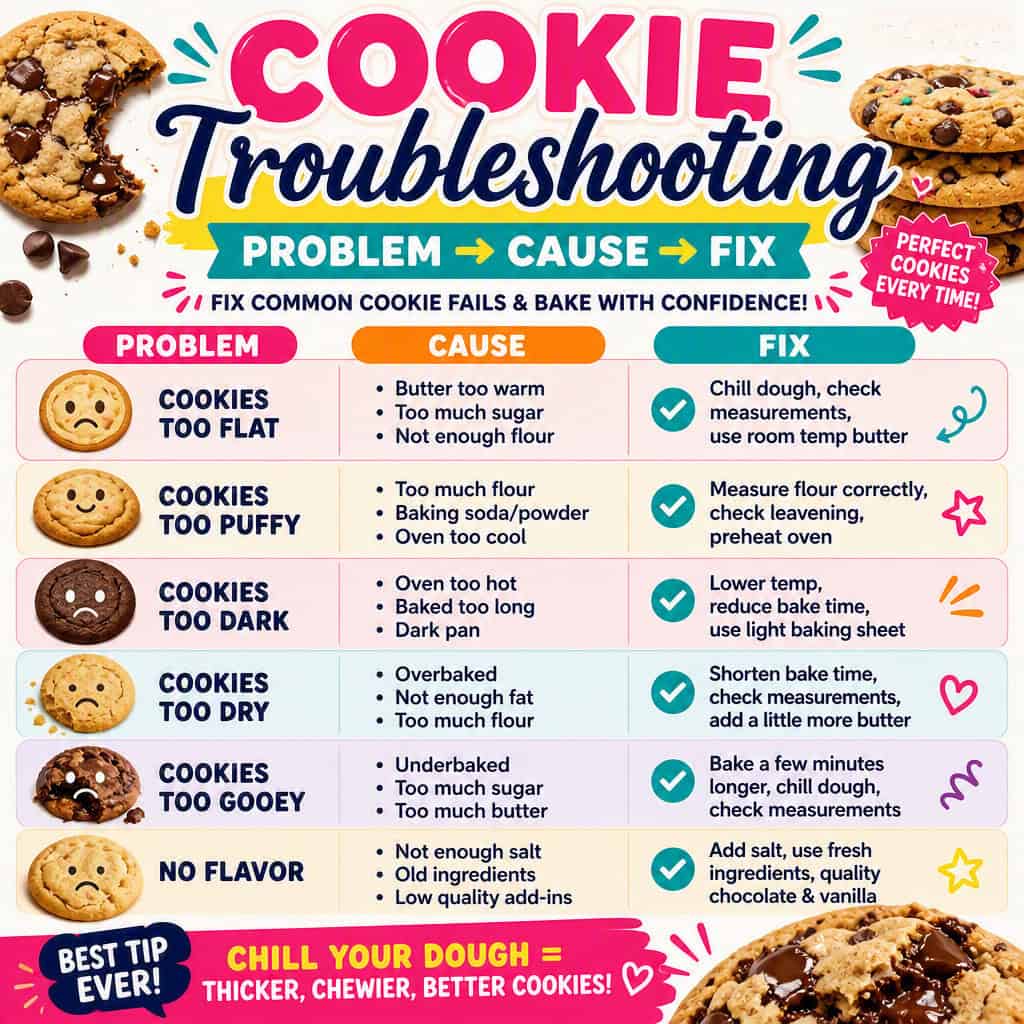
Now that we’ve uncovered the mystery behind cookie spread issues, let’s look at the biggest culprits. These are the reasons bakers most often end up with cookie puddles, cookie pancakes, and cookie‑what‑even‑happened‑here moments. Understanding these causes will help you fix cookies that spread too much and learn how to keep your dough from spreading every time you bake.
Below are the top issues that lead to cookies spreading in the oven, each explained with simple baking science and easy fixes.
Butter That’s Too Soft (or Basically Melted)
Butter that’s overly soft is one of the biggest troublemakers. If it looks shiny, greasy, or collapses when pressed, it’s already halfway to melted — and melted butter encourages spreading.
- Why it happens: Butter melts fast. If it melts before the cookie structure sets, the dough spreads outward. This is one of the top reasons cookies spread too much, especially when butter and sugar are creamed too aggressively.
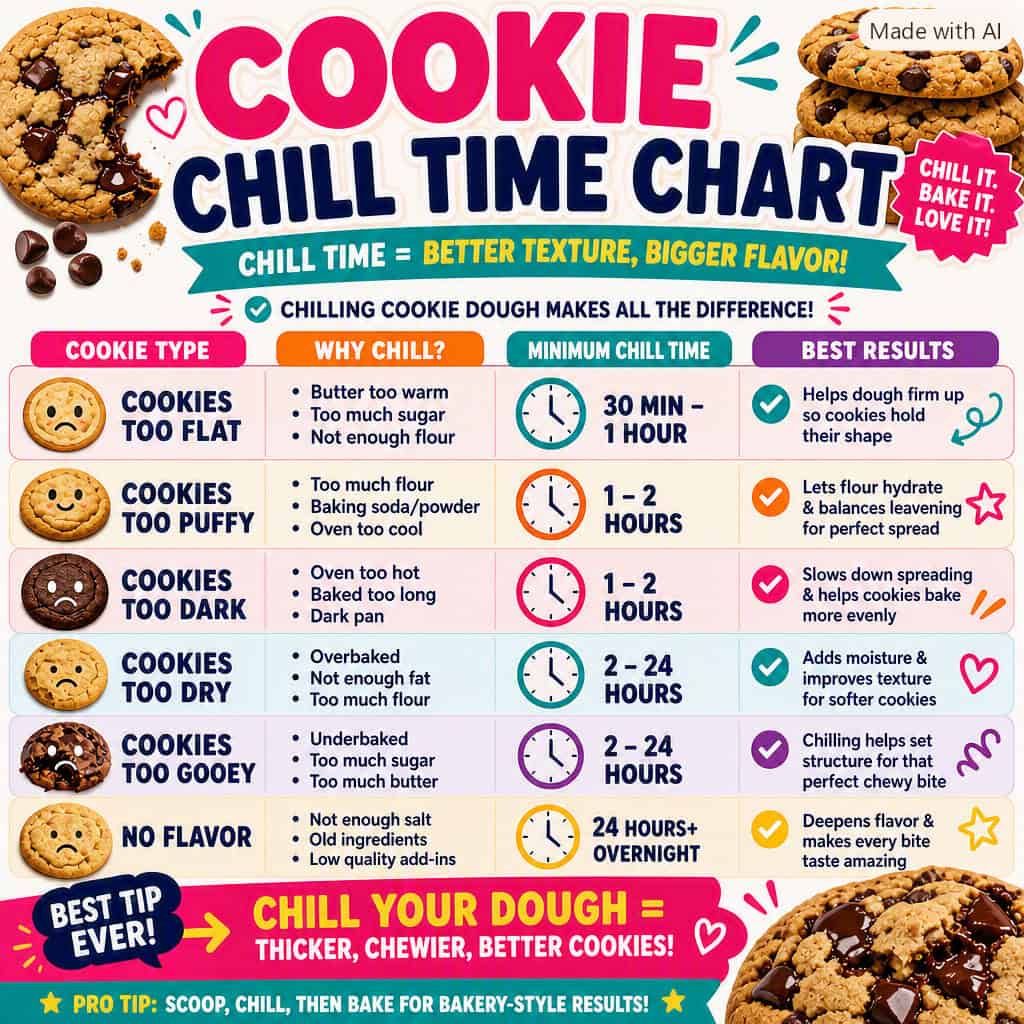
- How to fix it: Use butter that’s cool‑room‑temperature — soft enough to press a finger into, but not shiny or oily. If your dough feels warm or loose, chill it for 30–60 minutes. Chilling is one of the easiest ways to control cookie spread and keep your cookies thick.
Too Much Sugar
Sugar melts in the oven, turning into liquid — and liquid equals spread. If your cookies flatten more than expected, sugar may be the quiet culprit.
- Why it happens: Extra sugar = extra melt = extra spread.
- How to fix it: Measure sugar accurately. Spoon it lightly into the cup instead of packing it. This small change can dramatically reduce spreading.
Not Enough Flour
If your cookies are spreading like they’re auditioning for pancake duty, flour might be the issue.
- Why it happens: Flour gives cookies structure. Too little flour means your dough can’t hold itself up.
- How to fix it: Use the spoon‑and‑level method. If your dough looks loose or shiny, add 1–2 tablespoons of flour until it gently holds shape.
Oven Temperature Too Low
A cool oven is basically a cookie spa — everything melts before it sets.
- Why it happens: If your oven runs cooler than the dial says, butter melts too fast, causing spreading long before the edges can firm up.
- How to fix it: Use an oven thermometer. Most ovens run off by 10–25 degrees. A slightly higher temperature helps cookies set faster.
Overmixing the Dough
If your dough looks whipped, fluffy, or overly airy, you may have found the culprit.
- Why it happens: Overmixing adds air, which makes cookies puff up… then collapse… then spread.
- How to fix it: Mix until the flour just disappears.
Greased Pans
Greased pans act like slip‑n‑slides for cookie dough.
- Why it happens: Grease encourages spreading, even when the dough is perfect.
- How to fix it: Use parchment or silicone mats. They grip the dough just enough to keep it in place.
Dough That Wasn’t Chilled
Warm dough spreads. Cold dough holds shape.
- Why it happens: If your dough is warm from mixing or handling, the butter melts instantly in the oven.
- How to fix it: Chill dough 30–60 minutes for regular cookies, or overnight for thick bakery‑style cookies.
Quick Fixes: Fast Ways to Stop Cookie Spread
If you’re already mid‑bake and staring at a baking sheet full of cookie puddles, don’t worry — you can still save the day. These quick fixes help you stop cookies from spreading too much right now and prevent spreading in future batches.
Chill the Dough
- Cold dough = slower butter melt = less spreading. Chill dough for 30–60 minutes, or freeze dough balls for 10 minutes before baking.
Add 1–2 Tablespoons of Flour
- If your dough looks loose or shiny, a tiny bump of flour gives it structure.
Increase the Oven Temperature Slightly
- If your oven runs cool, your cookies melt before they set. Raising the temp by 10–15 degrees helps them firm up faster.
Switch to Parchment or Silicone Mats
- Greased pans encourage spreading. Parchment gives your dough a little grip.
Use a Cookie Scoop
- Evenly sized dough balls bake more consistently.
Let Your Baking Sheet Cool Between Batches
- A hot pan melts the bottoms instantly. Cool pans = controlled spread.
Bonus: Why Cookies Don’t Spread
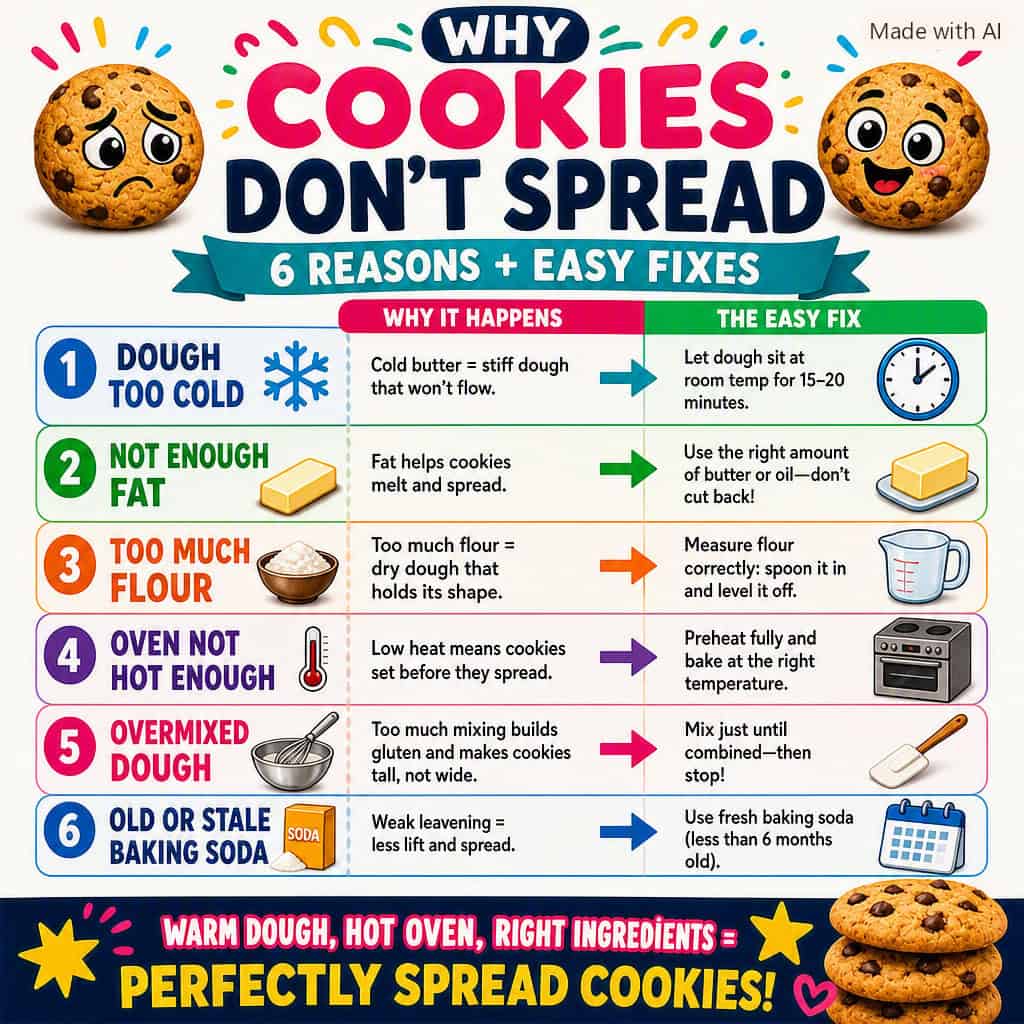
Sometimes cookies refuse to spread at all. Instead of turning into wide, golden puddles, they stay thick, chunky, and dome‑shaped. Here’s why that happens:
Too Much Flour
Extra flour gives dough too much structure.
- Fix it: Reduce flour slightly or double‑check your measuring method.
Oven Temperature Too High
A hot oven sets the edges instantly, locking the cookie in place.
- Fix it: Lower the temperature by 10–15 degrees.
Dough Over‑Chilled
Rock‑solid dough won’t budge in the oven.
- Fix it: Let dough sit at room temperature for 10–15 minutes.
Not Enough Sugar
Sugar melts and helps cookies spread.
- Fix it: Measure sugar accurately and use the type the recipe calls for.
Not Enough Butter
Butter helps cookies relax in the oven.
- Fix it: Check your butter measurement or add a small amount back in.
FAQs: Why Cookies Spread Questions, Answered
Why do my cookies spread so much?
Warm butter, too little flour, low oven temperature, or overmixing are the most common causes.
Why do my cookies spread even when I chill the dough?
If the butter was too soft before mixing, chilling won’t fully fix it. A cool oven can also cause spreading.
How do I keep cookies from spreading?
Chill the dough, use parchment, measure flour correctly, and make sure your butter isn’t too soft.
Why do my cookies spread only in the middle?
Your baking sheet might be too hot from a previous batch.
Does brown sugar make cookies spread?
A little — brown sugar adds moisture, which can increase spread.
Why do my cookies spread flat like pancakes?
Warm butter and low flour are the top causes of paper‑thin cookies.

For more cookie‑science insight, you can dive deeper into baking mechanics with King Arthur Baking’s Cookie Baking Tips.
Bringing It All Together Why Cookies Spread
Cookie spreading happens to every baker — beginners, pros, and everyone in between. But once you understand the main causes, what leads to spreading in the oven, and the simple tweaks that stop cookies from spreading too much, you’re officially in control of your cookie destiny.
With these tips, you’ll be able to troubleshoot any batch, fix cookie mishaps fast, and bake cookies that hold their shape every single time.